
Table of Contents
ToggleMilwaukee’s M18 battery platform has become the backbone of countless workshops, jobsites, and home garages since its launch. With over 250 tools running on the same battery system, it’s one of the most versatile cordless platforms available. But not all M18 batteries are created equal, capacity ratings, runtime expectations, and price points vary significantly. Whether someone’s framing a deck, finishing trim work, or tackling weekend repairs, choosing the right battery can mean the difference between completing a project and scrambling for a charger mid-task. This guide breaks down everything DIYers and professionals need to know about M18 batteries in 2026.
Key Takeaways
- The Milwaukee M18 battery platform offers backward and forward compatibility across over 250 tools, meaning batteries from any year work seamlessly in older and newer devices.
- M18 battery capacity ranges from 1.5 Ah to 12.0 Ah, with 5.0 Ah being the ideal choice for most DIY and general carpentry projects, delivering 2–3 hours of runtime at a balanced weight and price.
- REDLINK Intelligence in M18 batteries monitors individual cell performance and prevents overheating by communicating between the battery and tool, extending pack life compared to older designs.
- Store Milwaukee M18 batteries at 40–80% charge for long-term storage and maintain ambient temperatures between 32–120°F to prevent degradation and ensure optimal performance.
- Owning multiple batteries of the same capacity and rotating usage extends overall collection lifespan, while 5.0 Ah batteries provide the best value per amp-hour for most homeowners and DIYers.
What Makes the Milwaukee M18 Battery System Stand Out
The M18 platform uses 18-volt lithium-ion batteries with a slide-on mounting system that clicks into place with a satisfying snap. Unlike some competitors that use proprietary chemistries, Milwaukee sticks with reliable lithium-ion technology but focuses on electronics and heat management to squeeze out performance.
What separates M18 from the pack is REDLINK Intelligence, a circuit board in both the battery and tool that communicates constantly. This system monitors temperature, cell voltage, and current draw to prevent overheating and overloading. In practical terms, it means the battery won’t dump all its power into a stalled drill and burn out the motor.
The batteries use individual cell monitoring, not just pack-level tracking. Each of the ten or more 18650 lithium cells inside gets watched separately. If one cell starts to lag, the system compensates. This extends overall pack life considerably compared to older battery designs that would fail when one weak cell dragged down the whole string.
Milwaukee also built backward and forward compatibility into the system. A battery purchased in 2026 works in tools from a decade ago, and vice versa. That’s a huge advantage for anyone who’s invested in the platform, new tool releases don’t require new batteries, and battery improvements benefit the entire existing tool collection.
Understanding M18 Battery Capacities and Runtime
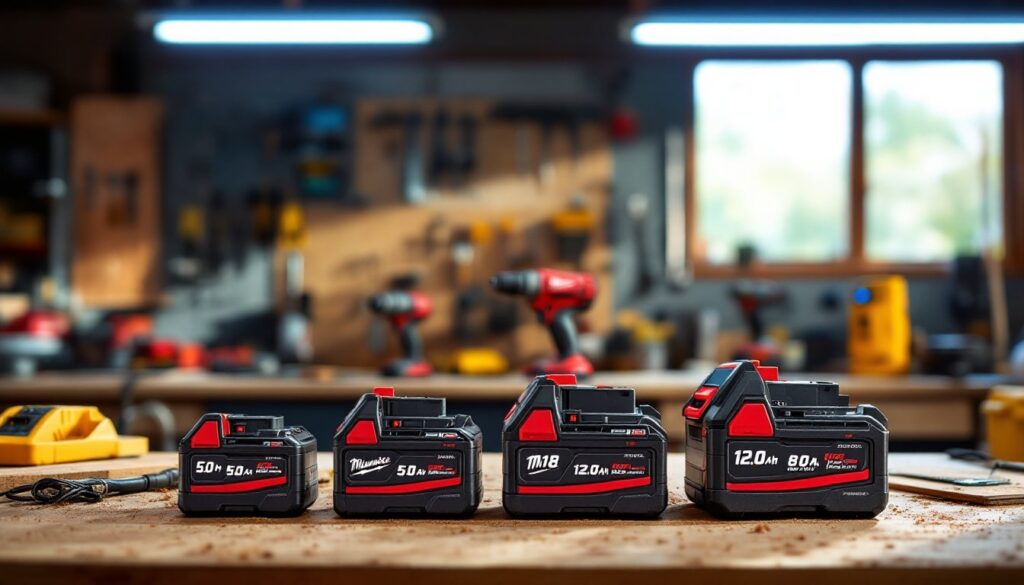
M18 batteries range from 1.5 Ah to 12.0 Ah (amp-hours), with several options in between. The amp-hour rating tells you total energy storage, higher numbers mean longer runtime, but also more weight and cost.
A 2.0 Ah compact battery weighs about 0.9 pounds and fits flush with most tool bodies. It’s ideal for finish work, overhead drilling, or any task where tool weight matters more than runtime. Expect 20–30 minutes of intermittent use on a drill or impact driver before needing a swap.
5.0 Ah batteries hit the sweet spot for most users. They weigh around 1.4 pounds and provide 2–3 hours of runtime on typical DIY tasks, driving screws, drilling holes, cutting boards. For heavy-draw tools like circular saws or reciprocating saws, runtime drops to 30–60 minutes depending on material and blade sharpness.
The 8.0 Ah and 12.0 Ah High Output batteries use 21700 cells instead of standard 18650s. These larger cells deliver more current, which means high-demand tools like table saws and blowers run at full power without voltage sag. The 12.0 Ah pack weighs 3.2 pounds, noticeable on an impact wrench but worth it when running a miter saw all day without swapping batteries.
Runtime also depends heavily on what the tool is doing. Drilling pilot holes in pine with a sharp bit barely taxes the battery. Boring 2-inch holes through doubled-up 2×10 joists with a dull spade bit will drain even a 12.0 Ah pack quickly. Always factor in blade condition, material hardness, and whether someone’s pushing the tool hard or letting it work at its own pace.
Choosing the Right M18 Battery for Your Projects
Match battery capacity to the tool and task, not just “bigger is better.” A 2.0 Ah battery makes sense for tools used in short bursts, impact drivers installing cabinet hardware, small drills for electrical work, or LED work lights. The weight savings reduce fatigue, especially overhead.
For general carpentry and most homeowner projects, 5.0 Ah batteries handle the workload without the bulk. They’re the go-to for framing, deck building, trim installation, and general repairs. Many professionals involved in step-by-step DIY project tutorials run these batteries as their primary power source for teaching purposes, they last long enough to complete demonstrations without being unwieldy.
8.0 Ah High Output batteries suit high-draw tools, 7-1/4″ circular saws, reciprocating saws cutting through nail-embedded lumber, or rotary hammers drilling into concrete. The extra current delivery keeps the tool running at full RPM instead of bogging down mid-cut.
Reserve 12.0 Ah batteries for stationary or cart-mounted tools like miter saws, table saws, and shop vacuums. The weight penalty doesn’t matter when the tool sits on a bench, and the runtime lets someone cut an entire deck’s worth of boards without interruption.
Buy at least two batteries of the primary capacity being used. This allows one to charge while the other runs. For all-day projects, three batteries create a rotation, one in the tool, one on the charger, one fully charged as backup. Mixing capacities works fine: keeping a compact 2.0 Ah for quick tasks and a 5.0 Ah for heavier work covers most scenarios without redundant purchases.
Extending Battery Life and Maintenance Tips
Lithium-ion batteries degrade over time regardless of use, but proper habits slow the process significantly. Store batteries between 40–80% charge for long-term storage. A fully charged battery sitting on a shelf for months will lose capacity faster than one stored at half charge. The rapid charger shows charge level with indicator lights, aim for two or three lit bars if the battery won’t be used for a while.
Temperature management matters more than most realize. Don’t leave batteries in a truck bed during summer or a cold garage in January. Lithium-ion cells perform poorly below 32°F and degrade quickly above 120°F. If a battery feels hot after use, let it cool to room temperature before charging. Milwaukee’s chargers have thermal sensors that delay charging on hot packs, but it’s better to avoid the heat in the first place.
Clean the slide contacts on both battery and tool every few months. Sawdust and grime build up in the grooves, creating resistance that generates heat and reduces runtime. A stiff brush or compressed air clears debris quickly. Wipe the contacts with a clean rag, no solvents needed.
Avoid full discharges when possible. Running a battery until the tool completely stops triggers low-voltage cutoff protection, which is fine occasionally, but repeated deep discharges shorten overall lifespan. Swap batteries when power noticeably drops rather than squeezing out every last bit.
For those tackling home improvement tools projects regularly, cycling batteries evenly extends the useful life of the entire collection. If someone owns three 5.0 Ah batteries, rotate them instead of favoring one until it wears out. Mark them with paint or tape to track rotation.
M18 Battery Compatibility Across Milwaukee’s Tool Lineup
Every M18 battery works in every M18 tool, no exceptions. A 2.0 Ah battery from 2015 fits a 2026 brushless impact driver, and a brand-new 12.0 Ah High Output battery powers a decade-old circular saw. This universal compatibility is a major selling point and cost saver.
But, performance varies. Older brushed motors don’t benefit from High Output batteries the same way brushless tools do. The battery will work, but the tool’s internal electronics might not draw the extra current available. Conversely, running a high-draw brushless tool on a small 2.0 Ah battery works but depletes it rapidly and may trigger thermal protection if the tool pulls too much current too quickly.
Some tools show obvious mismatches. A 12.0 Ah battery on a compact drill creates a top-heavy tool that’s awkward to use. A 2.0 Ah battery on a miter saw will technically run it, but only for a handful of cuts before dying. Milwaukee designs compact batteries for hand tools (drills, drivers, oscillating tools) and high-capacity batteries for stationary and high-draw tools (saws, vacuums, lights).
The M18 platform also includes oddball tools like radios, fans, heated jackets, and inflators. These run on any M18 battery but typically include a compact 2.0 Ah or 3.0 Ah in the kit since they don’t need massive capacity. Many hobbyists building beginner woodworking projects appreciate the flexibility of powering a radio, shop light, and entire tool kit from the same battery system.
Cost Comparison: When to Invest in Higher-Capacity Batteries
Battery pricing in 2026 varies by retailer and promotions, but general trends hold. A 2.0 Ah battery typically runs $50–$70 as a standalone purchase. 5.0 Ah batteries cost $100–$130 each, making them about twice the price but offering 2.5x the capacity, a better value per amp-hour.
8.0 Ah High Output batteries range from $150–$180, and 12.0 Ah batteries hit $200–$250. The cost per amp-hour climbs with larger packs, but the performance benefits justify the premium for specific uses. Someone running a miter saw all day saves time and hassle with a 12.0 Ah battery even though the higher upfront cost.
Kit deals offer the best value. Milwaukee frequently bundles tools with two 5.0 Ah batteries and a charger for less than buying components separately. If someone’s starting fresh or expanding their collection, buying a tool kit instead of bare tools + standalone batteries saves $50–$100 per kit.
For occasional DIYers, sticking with 5.0 Ah batteries makes financial sense. They handle most tasks, and the lower price point compared to High Output options means less money tied up in batteries. Professionals working daily, especially those running high-draw tools, benefit from 8.0 Ah or 12.0 Ah batteries even though higher costs. The reduced downtime and ability to run demanding tools at full power increases productivity enough to offset the expense.
Refurbished batteries from Milwaukee’s authorized service centers cost 20–30% less than new. They’re not as widely available, but for someone building a battery collection on a budget, they’re worth watching for. Avoid third-party knockoff batteries, they lack the REDLINK electronics and often use lower-quality cells that fail prematurely or, worse, create safety hazards.
Conclusion
Milwaukee’s M18 battery system delivers proven reliability and real versatility across hundreds of tools. Matching capacity to task, maintaining batteries properly, and buying strategically through kit deals maximizes value and performance. Whether someone’s building furniture, remodeling a kitchen, or running a jobsite, the M18 platform scales with the work, no need to switch systems as projects grow more ambitious.