
Table of Contents
ToggleRyobi’s 2026 lineup just hit shelves, and the One+ platform continues to evolve with smarter battery tech, more powerful motors, and features that actually solve job-site problems. Whether you’re framing a shed, overhauling a kitchen, or just filling gaps in your workshop, this year’s releases bring noticeable upgrades over previous generations. The brand’s maintained its accessible price point while pushing performance closer to premium-tier competitors. Here’s what’s new, what’s worth the upgrade, and how these tools stack up for real-world home improvement work.
Key Takeaways
- Ryobi’s 2026 lineup introduces brushless motors, improved battery tech with 25% longer runtime, and tool-free adjustments across the new Ryobi tools, delivering 20-30% more work per charge than previous generations.
- The One+ platform remains backward-compatible with all 18V batteries from the past decade, keeping entry costs low while HP-designated tools unlock enhanced performance and efficiency.
- New flagship models like the HP 18V Brushless Drill/Driver (750 in-lbs torque) and Impact Driver (2,200 in-lbs torque) rival premium competitors while maintaining Ryobi’s accessible price point, making them ideal for homeowners and weekend builders.
- Smart features including Bluetooth connectivity, app-based customization, and fuel gauge LEDs with four-bar indicators allow users to track runtime, optimize power delivery, and locate tools—enhancing job-site efficiency.
- For high-use tools like drills, drivers, and saws, upgrading to 2026 HP models justifies the investment, while incremental upgrades to routers, jigsaws, and sanders work best as replacements for worn equipment.
What Makes Ryobi’s 2026 Tool Lineup Stand Out
Ryobi’s 2026 releases focus on three core improvements: battery efficiency, brushless motor adoption, and tool-free adjustments. The updated HP (High Performance) series now includes a 4Ah and 6Ah battery with thermal management that reduces overheating during sustained cuts or drilling in hardwood and masonry. Real-world tests show roughly 25% longer runtime compared to 2024 equivalents under similar load.
Brushless motors have trickled down to mid-range models that previously used brushed variants. This means less maintenance, cooler operation, and better torque delivery. For DIYers tackling deck builds or cabinet installations, that translates to fewer battery swaps and more consistent performance through thick material.
Tool-free depth adjustments, bevel locks, and blade changes now appear across the saw lineup. No more hunting for hex keys mid-cut. Ryobi’s also added onboard accessory storage to several models, blade wrenches clip directly to the tool body, and depth gauges tuck into recessed slots. Small details, but they matter when you’re working off a ladder or moving between rooms.
The One+ platform remains backward-compatible. Any 18V battery from the last decade still fits, though older batteries won’t unlock the full power potential of HP-designated tools. That compatibility keeps the barrier to entry low for anyone already invested in the ecosystem.
Top New Ryobi Power Tools for Home Improvement Projects
Cordless Drills and Impact Drivers
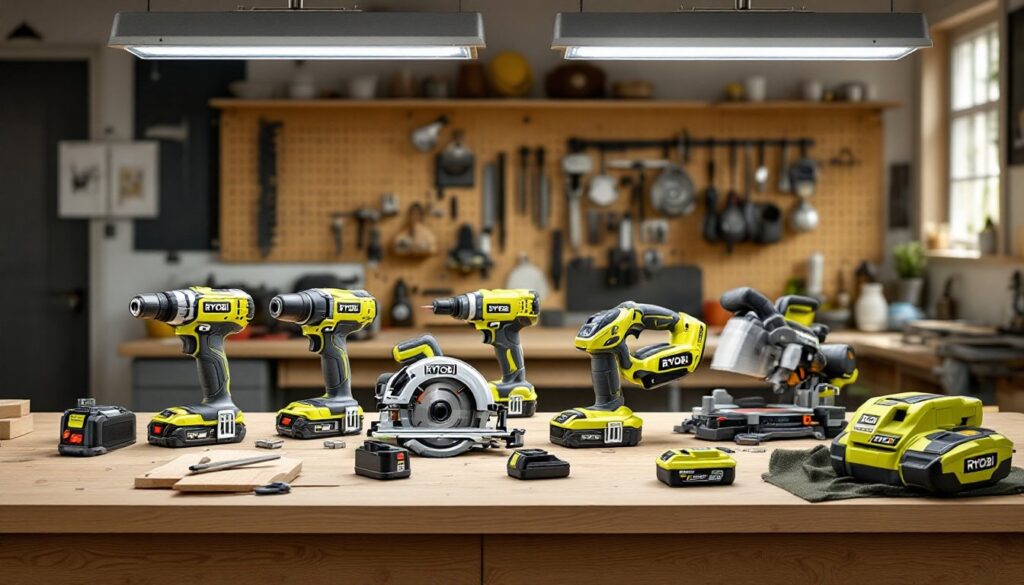
The One+ HP 18V Brushless Drill/Driver (PBLDD02) delivers 750 in-lbs of torque, which handles 3-inch deck screws through pressure-treated lumber without bogging down. It’s not quite Milwaukee Fuel territory, but it outperforms the previous generation by a noticeable margin. The two-speed gearbox (0-500 and 0-2,000 RPM) gives enough control for pilot holes in hardwood and enough speed for general fastening.
The matching One+ HP 18V Brushless Impact Driver (PBLID02) pushes 2,200 in-lbs of torque and includes a four-mode drive control. The first mode is low-speed for cabinetry work where you don’t want to strip screws or blow through thin material. Mode four is full-send for framing. Most DIYers will live in mode two for everyday tasks. When comparing the best cordless drills for 2026, Ryobi’s updated models hold their own against pricier brands.
Both tools now feature LED work lights with a delayed shutoff, which stay lit for about five seconds after releasing the trigger. Small upgrade, big convenience when working inside cabinets or overhead.
Innovative Saws and Cutting Tools
The One+ HP 18V Brushless 7-1/4″ Circular Saw (PBLCS300) is the standout. At 5,800 RPM and with a 2-9/16″ max cut depth at 90°, it handles full-depth cuts through 2x material (actual 1-1/2″ thickness) in a single pass. The brushless motor doesn’t bog in wet or treated lumber the way older models did. The bevel adjustment locks at 0°, 22.5°, 45°, and 50° with positive stops and a tool-free lever.
Ryobi also updated the One+ 18V 6-1/2″ Circular Saw (P508) for lighter tasks. It’s smaller, easier to control one-handed for crosscuts, and runs on the same batteries. Not as aggressive as the 7-1/4″ model, but ideal for plywood, trim, and finish work. A circular saw works for most home projects, but if you’re cutting a lot of miters for trim or picture frames, a dedicated miter saw gives cleaner angle cuts.
The new One+ HP 18V Brushless Jigsaw (PBLJS02) includes tool-free blade changes and an orbital action dial with four settings. Higher orbital settings cut faster but leave rougher edges, fine for demolition or rough carpentry. Lower settings give cleaner cuts for finish work. The adjustable shoe bevels to 45° left and right, and the dust port actually works when connected to a shop vac.
Must-Have New Ryobi Tools for Your Workshop
For workshop builds or tool-heavy renovations, Ryobi’s 2026 releases include a few bench tools that blur the line between portable and stationary.
The 18V One+ 10″ Dual Bevel Sliding Miter Saw runs on two batteries simultaneously for consistent power. It’s not a replacement for a corded 12″ slider if you’re cutting crown molding all day, but for intermittent cuts during a bathroom remodel or deck project, it eliminates the need for extension cords. The laser guide is gimmicky in bright light, but the LED work light is useful. Max crosscut capacity is 12″ at 90° and 8-1/2″ at 45°, which covers most standard trim and framing.
The One+ HP 18V Brushless Router (PBLRT01) offers variable speed from 16,000 to 25,000 RPM and accepts 1/4″ shank bits. It’s a trim router, not a plunge router, so it’s best for edge profiles, hinge mortises, and light dado work. The depth adjustment is micro-tunable and locks with a thumb screw. Pair it with a straight-edge guide for routing dadoes in plywood cabinet sides. For serious joinery or repeated cuts, a corded plunge router with a 1/2″ collet is still the better choice.
Ryobi’s updated 18V One+ Random Orbit Sander (P411) now includes a hook-and-loop pad and better dust collection. It’s a 5″ sander, accepts standard stick-on or Velcro discs, and has a variable speed dial. Not groundbreaking, but the previous model’s dust collection was almost useless, this one actually clears most sawdust when connected to a vac. According to insights shared on familyhandyman.com, proper dust collection during sanding prevents finish defects and keeps your workspace safer.
Smart Features and Technology Upgrades in New Ryobi Releases
Ryobi’s added Bluetooth connectivity to select 2026 tools through the One+ HP app-enabled series. The app tracks runtime, battery health, and tool usage. More useful: it includes a tool locator feature that triggers an audible alarm if you’ve buried a drill under a pile of lumber. The app also lets you customize speed and torque settings on compatible impact drivers and drills, then save profiles for different tasks.
The 4Ah and 6Ah HP batteries now feature fuel gauge LEDs with four bars instead of three, giving a more accurate read on remaining charge. They also communicate with HP tools to optimize power delivery based on load. When the tool senses you’re drilling into a 6×6 post, it pulls more current. When you’re driving finish screws, it dials back to preserve battery.
USB charging ports appear on the new 6Ah batteries, which can charge phones or headlamps at 2.1A. Not a game-changer, but handy on a job site without easy access to outlets.
The impact-resistant overmold on 2026 HP tools is noticeably thicker and grippier than previous generations. Ryobi’s been criticized for flimsy housings in the past, these updates address that. Drop a drill off a six-foot ladder, and it’ll likely survive. Still, treat them like the affordable tools they are, not like rental-grade equipment.
How New Ryobi Tools Compare to Previous Models
If you own 2022-2024 Ryobi One+ tools, the jump to 2026 HP models is noticeable but not mandatory. The brushless motors alone justify an upgrade if you’re using tools daily or pushing them hard. Runtime improvements are real, expect 20-30% more work per charge with HP batteries in HP tools. Non-HP tools still run on HP batteries, but you won’t see the same efficiency gains.
The 2026 circular saw is about 1.2 lbs lighter than the 2023 brushed model and cuts faster through dimensional lumber. If you’re framing or building furniture, that’s worth the swap. For occasional DIY cuts, the older saw still works fine.
Impact drivers from 2024 and earlier top out around 1,800 in-lbs. The new 2,200 in-lbs model drives lag screws and long structural fasteners with less cam-out and fewer stripped heads. If you’re hanging heavy shelving, installing ledger boards, or building a pergola, the extra torque matters. For assembling flat-pack furniture, it doesn’t.
The router, jigsaw, and sander are incremental upgrades. Better dust collection, tool-free adjustments, and slightly better ergonomics. Not must-haves if you already own functional versions, but solid first-tool purchases if you’re building a kit from scratch. Enthusiasts looking to expand their workshop affordably can also check current hand tool deals to round out their collection.
Ryobi’s warranty remains 3 years for One+ tools and batteries, which is standard for the category. Registration through the app or website unlocks an additional year on select HP models. Keep your receipts, warranty claims require proof of purchase. Experienced builders often reference thisoldhouse.com for long-term tool reliability reviews and maintenance tips.
Bottom line: 2026 HP tools are the best Ryobi’s made. They won’t replace pro-grade Milwaukee or DeWalt kits, but they close the gap enough that most homeowners and weekend warriors won’t notice the difference. If you’re already deep in the One+ ecosystem, the HP upgrades are worth it for high-use tools like drills, drivers, and saws. For everything else, upgrade as older tools wear out.