
Table of Contents
ToggleWhen a tool brand has been around since 1886, it’s earned its reputation through more than just marketing. Bosch hand tools have become a staple in workshops and job sites worldwide, trusted by professionals and weekend warriors alike. But with countless options flooding the market, from budget bin specials to premium imports, what makes Bosch worth a closer look? The answer lies in a combination of German engineering, thoughtful design, and tools that actually hold up to real-world use. Whether someone’s framing a basement, installing trim, or tackling their first major renovation, understanding what Bosch brings to the table can save both money and frustration.
Key Takeaways
- Bosch hand tools balance cost with performance through German engineering, chrome vanadium steel construction, and ergonomic bi-material handles that reduce fatigue during extended use.
- Bosch hand tools come with a limited lifetime warranty covering defects in materials and workmanship, making them a practical investment for DIYers tackling multiple projects annually.
- Measuring, cutting, and shaping categories—including laser measuring devices, precision-ground saws, and high-carbon steel chisels—represent Bosch’s strongest product lines for residential projects.
- Selecting the right Bosch hand tools depends on your specific project type, from general home maintenance basics to specialized trim carpentry or heavy-duty framing equipment.
- Proper maintenance including regular cleaning, sharpening cutting tools, rust prevention with paste wax, and organized storage ensures Bosch hand tools deliver decades of reliable use.
- Avoid purchasing oversized tool sets with unnecessary pieces; instead, start with quality core Bosch hand tools and add specialized items as projects demand them.
Why Bosch Hand Tools Stand Out in the Market
Bosch didn’t build its name on hand tools alone, the company’s legacy in power tools and automotive components sets a baseline expectation for precision and durability. That engineering mindset carries over to their hand tool line. Where some manufacturers chase the lowest price point, Bosch focuses on balancing cost with performance.
One standout feature is material selection. Many Bosch hand tools use chrome vanadium steel or carbon steel alloys that resist wear and corrosion better than the soft metals found in bargain bin alternatives. Their adjustable wrenches, for example, often feature knurled adjustment wheels that actually stay put under load, a small detail that matters when working in tight quarters under a sink or behind an appliance.
Ergonomics also set Bosch apart. Grips are contoured and often feature bi-material handles (a hard core with a softer overmold) that reduce hand fatigue during extended use. Anyone who’s spent an afternoon driving screws by hand or chiseling out old caulk knows that grip comfort isn’t just luxury, it prevents blisters and improves control.
The brand’s warranty and support deserve mention too. Most Bosch hand tools come with a limited lifetime warranty covering defects in materials and workmanship. That’s not a guarantee against abuse (don’t use a screwdriver as a pry bar), but it does mean the company stands behind its manufacturing. When a ratchet fails because of a faulty pawl mechanism rather than misuse, Bosch typically replaces it without much hassle.
Price-wise, Bosch lands in the mid-to-upper range. They’re not the cheapest option at the big box store, but they’re also not priced like boutique toolmakers. For DIYers who tackle multiple projects a year, that sweet spot makes sense, tools that won’t fail halfway through a deck build but won’t require a second mortgage either.
Top Bosch Hand Tools Every DIYer Should Own
Measuring and Marking Tools
Accurate measurement separates a professional-looking job from one that screams “amateur.” Bosch offers several tools in this category that punch above their weight class.
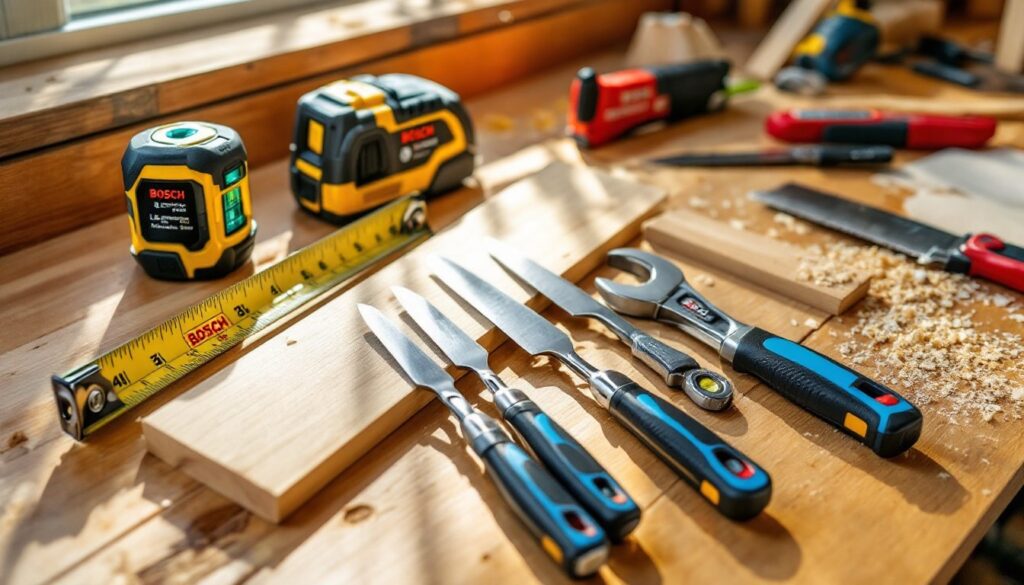
The Bosch laser measuring devices (technically handheld electronic tools, but worth mentioning) deliver measurements up to 165 feet with ±1/16-inch accuracy. They’re faster than a tape measure for long runs and eliminate the sag problem on spans over 20 feet. For traditional measuring, Bosch’s tape measures feature nylon-coated blades that resist kinking and standout distances of 7-10 feet depending on the model, helpful when measuring alone.
Marking tools include their chalk reels, which use a 3:1 gear ratio for faster line marking and a sliding door that reduces chalk puffing (less mess on finish floors). The line itself stays visible longer than cheaper alternatives, especially on rough lumber or concrete.
Bosch levels range from compact 9-inch torpedo levels to 48-inch box beam models. The longer levels feature milled edges that double as straightedges for scribing cuts. Vial accuracy is typically within 0.0005 inches per inch, more than sufficient for residential work. Many experienced builders appreciate the comprehensive tool selection available across measuring categories, making it easier to outfit a workshop with compatible gear.
Cutting and Shaping Tools
Cutting tools are where hand tool quality becomes immediately obvious. A dull blade or poorly aligned saw makes every cut a struggle.
Bosch hand saws use hardened, precision-ground teeth that stay sharp through dozens of cuts. Their fine-tooth pull saws (typically 17-20 TPI) excel at finish work like trimming door casings or cutting dowels flush. For rougher work, their crosscut saws (8-10 TPI) move through framing lumber without binding.
Utility knives from Bosch feature quick-change blade mechanisms, no screwdriver needed to swap a dull blade. The anti-slip grip matters when scoring drywall or trimming laminate flooring, tasks that require controlled pressure. Some models include onboard blade storage for up to five spare blades.
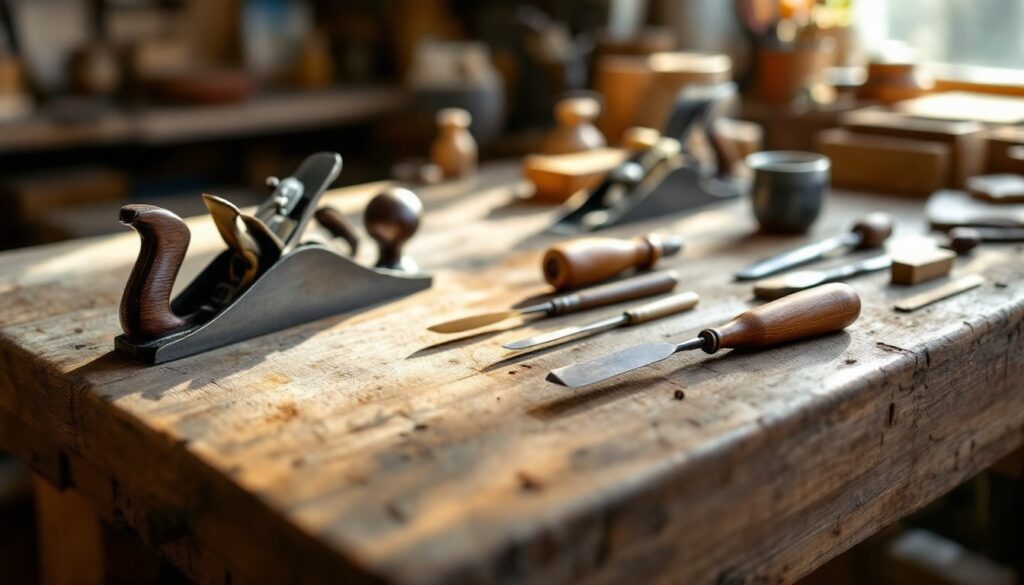
Their chisels deserve special mention. Bosch wood chisels use high-carbon steel with bevel angles between 25-30 degrees, ideal for paring cuts in hardwood trim or cleaning out mortises. The impact-resistant handles can take hits from a mallet without cracking, important when chopping out hinge mortises in solid oak door jambs. Safety reminder: Always keep hands behind the cutting edge and wear safety glasses when striking chisels with a mallet.
Bosch also produces wood rasps and files with double-cut patterns that remove material quickly without clogging. They’re essential for fitting wood joints that are slightly too tight or smoothing rough edges after sawing.
Choosing the Right Bosch Hand Tools for Your Projects
Matching tools to tasks prevents both overspending and underperformance. A finish carpenter needs different tools than someone building a shed, even if both are “doing woodworking.”
For general home maintenance, start with the basics: a 16-ounce claw hammer, adjustable wrench set (6-inch and 10-inch covers most needs), multi-bit screwdriver, and a 25-foot tape measure. These handle everything from hanging pictures to assembling furniture to minor plumbing repairs. Bosch’s handheld tools for repairs provide solid options in this category without requiring a massive upfront investment.
Trim carpentry and finish work demand precision tools. Add a 48-inch level, combination square, block plane, and a set of wood chisels (1/4-inch, 1/2-inch, 3/4-inch, and 1-inch widths cover most scenarios). A miter box with back saw works for occasional angle cuts, though a powered miter saw makes cleaner, faster cuts if the budget allows.
For rough carpentry (framing, deck building, fence installation), prioritize heavy-duty tools: a 22-ounce framing hammer, speed square, chalk line, cat’s paw nail puller, and a utility knife with hook blades for cutting roofing felt or house wrap. Bosch’s heavier hammers feature vibration-dampening handles that reduce arm fatigue during all-day use.
Automotive and mechanical work requires different tools entirely. A socket set (1/4-inch and 3/8-inch drive covers most car work), ratcheting wrench set, pliers set (slip-joint, needle-nose, and locking pliers), and hex key sets (both metric and SAE) handle routine maintenance. Bosch’s ratcheting wrenches use a fine-tooth mechanism (72 teeth or more) that requires only 5 degrees of swing, crucial in tight engine bays.
Avoid the trap of buying massive tool sets just because they look impressive. A 200-piece set sounds great until someone realizes they’ll never use 60% of the included bits. Start with quality core tools and add specialized pieces as projects demand them. Resources on essential hand tools can help prioritize purchases based on actual needs rather than marketing hype.
Regional considerations matter too. Someone in a humid coastal climate should prioritize rust-resistant tools more than someone in an arid environment. Bosch’s chrome-plated and powder-coated finishes hold up well in damp conditions, but proper storage still matters (more on that below).
Caring for and Maintaining Your Bosch Hand Tools
Quality tools last decades if treated right, or fail prematurely if neglected. Maintenance doesn’t require much time, but it does require consistency.
Cleaning after use prevents 90% of problems. Wipe down metal surfaces with a dry cloth after each use to remove moisture, sawdust, and oils from hands. For stubborn grime, use mineral spirits on a rag (not WD-40, which attracts dust). Professionals at Family Handyman emphasize this basic step as the single most important maintenance habit.
For cutting tools, sharpness is everything. Wood chisels and plane blades need honing every few uses. A simple combination sharpening stone (1000/6000 grit is versatile) and honing guide make the job easier. Maintain the factory bevel angle unless changing it for a specific purpose. Saw teeth can be sharpened with a triangular file, but many DIYers find it easier to replace blades when dull, a fine-tooth pull saw blade costs $8-15 and beats an hour of tedious filing.
Rust prevention matters even with quality steel. In humid environments or unheated workshops, apply a thin coat of paste wax or tool oil to bare metal surfaces every few months. Don’t use heavy grease, it attracts sawdust and makes tools unpleasant to handle. Store tools in a dry location: a dehumidifier in the workshop prevents more rust than any amount of oil.
Storage organization prevents damage and saves time. Tool rolls protect chisels and other edge tools from chipping. Socket organizers (the rail type or magnetic trays) keep sockets sorted by size. Pegboard or French cleat systems keep frequently used tools visible and accessible. Tossing everything in a drawer is a recipe for bent tips, lost pieces, and wasted time searching.
Mechanical tools like ratchets and adjustable wrenches need occasional lubrication. A drop of light machine oil on pivot points and ratcheting mechanisms keeps them smooth. Don’t over-oil, excess attracts dirt.
Inspect tools regularly for damage. Check wooden handles for splits or cracks (replace before they fail under load). Examine hammer faces for mushrooming (grind down peened edges with a bench grinder). Replace utility knife blades at the first sign of dullness, forcing a dull blade causes slips and injuries.
Safety gear for tool maintenance includes cut-resistant gloves when sharpening blades and safety glasses when grinding or filing metal. Many DIYers following guides from Fix This Build That have learned that proper tool care prevents mid-project failures.
Watching for seasonal tool deals allows savvy DIYers to expand their Bosch collection affordably while staying within budget. Proper maintenance ensures those investments deliver value for years.
Warranty claims require proof of purchase and photos showing the defect. Keep receipts in a labeled folder or take photos with a phone and store them in a cloud folder labeled “Tool Receipts.” When a tool fails, contact Bosch customer service before attempting repairs, DIY fixes often void warranties.
Conclusion
Bosch hand tools occupy a practical middle ground, well-made without the premium price tag of boutique brands, yet far more reliable than bottom-shelf alternatives. For DIYers who tackle real projects rather than occasional picture-hanging, investing in quality tools pays off in fewer replacements, better results, and less frustration. Start with the essentials, maintain them properly, and add specialized tools as projects demand. The right tool for the job isn’t just a cliché, it’s the difference between a satisfying build and a weekend of struggle.