
Table of Contents
ToggleMidland power tools occupy an interesting spot in the DIY market, they’re not the name on every contractor’s van, but they’ve built a reputation among weekend builders and home renovators for delivering solid performance without the premium price tag. If you’re weighing options for your next drill, saw, or impact driver, understanding what Midland brings to the table helps you make a smarter investment. This guide breaks down their core product categories, standout features, and how to match the right tool to your specific projects, no marketing fluff, just what matters when you’re actually swinging a hammer or cutting plywood.
Key Takeaways
- Midland power tools offer a balanced value proposition for DIYers and light commercial use, delivering solid performance at mid-tier pricing without the premium costs of professional-grade brands.
- The 20V lithium-ion battery platform makes Midland tools highly practical, as batteries are interchangeable across the entire cordless lineup—eliminating the need for multiple chargers and simplifying your toolkit.
- Brushless motors in Midland’s higher-end models provide 20–30% longer runtime and cooler operation compared to brushed alternatives, making them ideal if you’re planning multiple projects or extended work sessions.
- Match your tool selection to your actual project needs: basic maintenance requires only a drill/driver kit ($80–$120), while renovation work demands a combo kit with impact driver, reciprocating saw, and circular saw ($200–$300).
- Cordless Midland tools sacrifice some runtime compared to corded models, so for stationary work or dense hardwoods, corded options or higher amp-hour batteries (4.0+ Ah) prevent frequent battery swaps and voltage sag.
- Parts availability and warranty coverage (3 years on tools, 2 years on batteries) are mid-pack, so registering your tools after purchase is critical to avoid warranty claim denials and to understand repair options before failure occurs.
What Are Midland Power Tools?
Midland power tools represent a mid-tier brand focused on battery-powered and corded tools for residential construction, renovation, and maintenance. Unlike premium brands that dominate the pro market or budget tools sold through discount chains, Midland positions itself for serious DIYers and light commercial use.
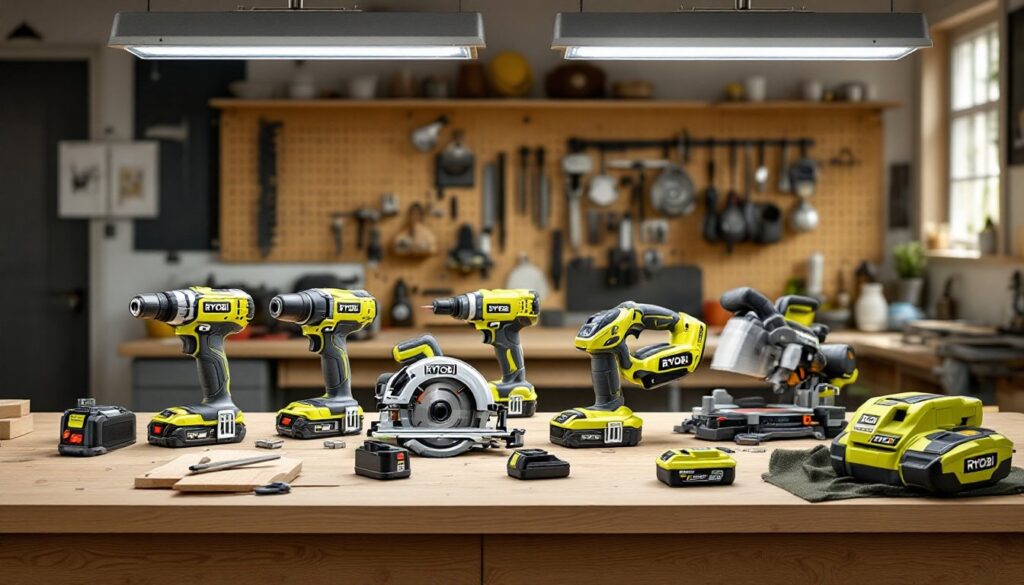
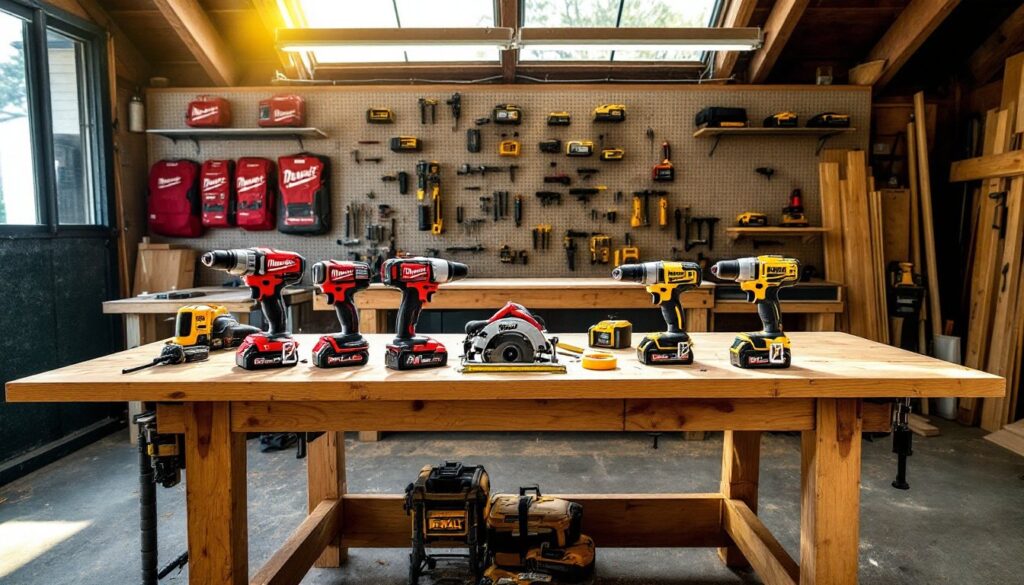
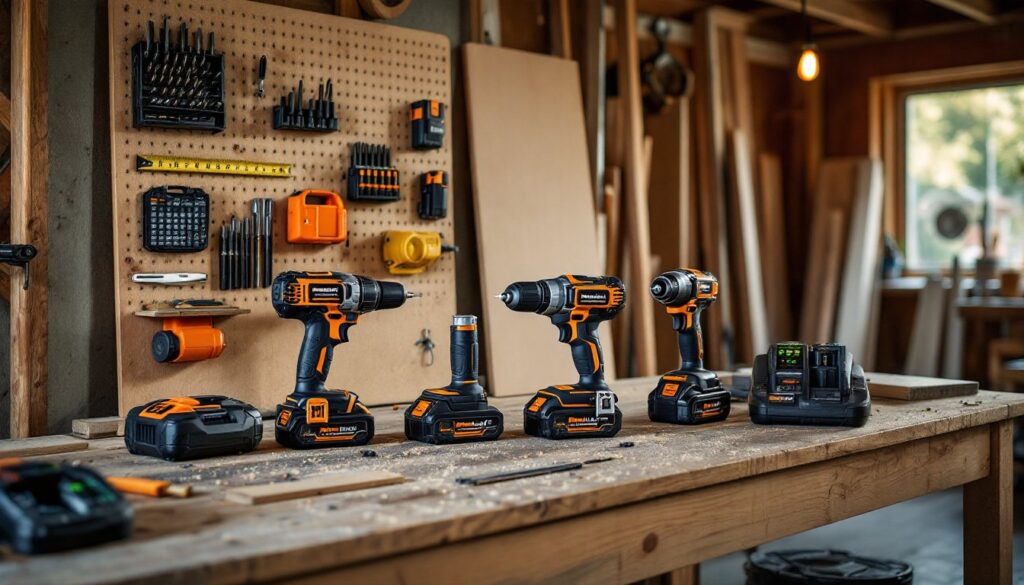
Their lineup includes cordless drill/driver kits, reciprocating saws, circular saws, angle grinders, and rotary tools, essentially covering the core needs of most home improvement projects from framing a deck to installing trim. Most of their cordless platforms run on 20V lithium-ion batteries, which is the sweet spot for balancing runtime and weight on tools you’ll hold overhead or maneuver in tight spaces.
You won’t find Midland in every big-box store, which affects availability but also keeps their distribution lean. Some models ship through independent hardware suppliers and online retailers. That means you might not get hands-on feel before buying, so understanding specs and user experiences matters more than with brands you can test in-store.
Build quality typically features impact-resistant housings, rubberized grips, and metal gear cases on higher-torque models, details that separate serviceable tools from disposable ones. Battery systems use slide-on packs compatible across the same voltage line, so buying into one platform lets you swap power sources between your drill, saw, and light without owning six chargers.
Top Midland Power Tool Categories for Home Projects
Drills and Impact Drivers
Midland’s drill offerings break into standard drill/drivers and impact drivers, two tools that look similar but handle different tasks. A drill/driver works for boring holes and driving screws in softer materials like pine framing or drywall, with adjustable clutch settings (usually 16–24 positions) to prevent stripping screw heads. Expect 350–450 in-lbs of torque on mid-range models, enough for deck screws and cabinet hardware.
Impact drivers deliver rotational bursts (impacts) that push screws through harder material without camming out. Midland’s impact models typically hit 1,400–1,600 in-lbs, making them the right choice for lag bolts, structural screws, or driving 3-inch fasteners into treated lumber. The trade-off: impacts are louder and less precise for delicate work. Wear hearing protection when running impacts for extended periods, they peak around 100 dB.
Battery life varies by amp-hour rating. A 2.0 Ah battery gives roughly 30–45 minutes of moderate drilling: a 4.0 Ah pack doubles that but adds weight. For overhead work or long days, having a spare charged battery prevents downtime. Midland’s chargers usually cycle a depleted 2.0 Ah in about 45 minutes, which is competitive with established brands.
Saws and Cutting Tools
Midland circular saws come in corded and cordless formats. The 7-1/4 inch blade size is standard for framing and sheet goods, it’ll cut through a 2×4 at 90° in one pass (actual depth around 2-3/8 inches at max setting). Cordless models sacrifice some runtime: expect about 40–60 cuts through 3/4-inch plywood on a 4.0 Ah battery before swapping.
Bevel capacity usually maxes at 50–55 degrees, adequate for most compound cuts but limiting for aggressive roof pitches. Blade-left vs. blade-right configurations affect sightlines: most Midland saws position the blade on the right, which favors right-handed users following a cut line from above.
Reciprocating saws (recip saws or Sawzalls, generically) handle demo work, cutting through wall studs, PVC drain lines, or pruning branches. Midland models feature tool-free blade changes and stroke lengths around 1-1/8 inches, which is mid-pack. Longer strokes cut faster but vibrate more. Always use bi-metal blades rated for your material: wood blades in metal pipe will overheat and dull fast.
Jigsaws in Midland’s range offer orbital action settings (0–3 typically) that swing the blade forward on the upstroke for faster, rougher cuts in softwood, or disable it for cleaner curves in hardwood and laminate. Variable speed triggers help: starting slow prevents the blade from wandering on initial entry. For projects demanding precision storage, keeping blades organized by tooth count (6 TPI for fast rough cuts, 12+ TPI for finish work) saves time.
Key Features That Set Midland Apart
Battery interchangeability across the 20V platform ranks as Midland’s strongest selling point. Buy a combo kit with drill and impact driver, and those two batteries also power your circular saw, work light, and blower. This ecosystem approach mirrors what Milwaukee, DeWalt, and Ryobi do, but at a lower entry cost.
LED work lights integrated near the chuck or blade guard show up on most Midland cordless tools. These stay lit for 10–20 seconds after releasing the trigger, useful when you’re working in unfinished basements or crawl spaces. It’s a small thing, but it beats juggling a headlamp.
Brushless motors appear in Midland’s higher-end models (usually marked “BL” or “Brushless”). Brushless designs run cooler, deliver 20–30% longer runtime per charge, and need less maintenance than brushed motors. For occasional DIYers, a brushed motor is fine: if you’re framing a shed or building multiple furniture pieces, brushless pays off.
Ergonomics lean toward compact grips with rubberized overmolding. Midland tools typically weigh 3–4 lbs for drills and 6–7 lbs for circular saws (with battery), which sits between ultra-light consumer models and heavier pro tools. Balance matters more than absolute weight: a well-balanced 7 lb saw feels better after 20 cuts than a nose-heavy 6 lb model.
Warranty coverage generally runs 3 years on tools and 2 years on batteries, middle of the pack. Some brands offer lifetime service: others cap at one year. Always register tools after purchase: warranty claims without proof of purchase date get denied.
One weakness: parts availability. If a chuck or trigger switch fails outside warranty, sourcing OEM parts can be slower than with major brands that stock components at regional service centers. Third-party repair shops may substitute generic parts, which voids remaining warranty coverage.
Choosing the Right Midland Power Tool for Your DIY Needs
Start by auditing your project list over the next 6–12 months. Building a deck, installing baseboards, and assembling flat-pack furniture all need different tools.
For general home maintenance, hanging shelves, assembling furniture, minor repairs, a basic drill/driver kit with two 2.0 Ah batteries covers 80% of tasks. Add a set of twist bits (1/16″ to 1/2″ by sixteenths) and driver bits (Phillips #1, #2, square drive #2). Budget around $80–$120 for this setup.
Renovation projects (tearing out old flooring, cutting in new windows, framing walls) demand more muscle. Prioritize an impact driver for fastening, a reciprocating saw for demolition, and a circular saw for cutting framing lumber and sheet goods. Combo kits bundling three tools with batteries run $200–$300 and deliver better value than buying individually.
If you’re tackling finish carpentry, crown molding, window casing, built-in shelving, accuracy trumps power. A miter saw (not always in Midland’s cordless lineup, but corded models exist) makes repeatable angle cuts cleaner than a circular saw with a speed square. Pair it with a finish nailer (pneumatic or battery, depending on compressor access). Midland’s cordless nailers use the same 20V batteries, which simplifies charging logistics on site.
Material considerations: Hardwoods (oak, maple) and engineered lumber (LVL, I-joists) strain batteries faster than pine or plywood. If your project involves dense material, opt for higher amp-hour batteries (4.0 Ah or 5.0 Ah) to avoid constant swaps.
Corded vs. cordless: Portability is obvious with battery tools, but corded models deliver consistent power without runtime limits. For stationary tasks, cutting a pile of boards at a workbench, sanding a deck, corded often makes sense. Midland’s corded circular saw, for example, pulls 15 amps and won’t bog down mid-cut like a battery saw under load.
Check whether your project requires permits or inspections. Adding a new circuit for a garage workshop means pulling an electrical permit and meeting NEC (National Electrical Code) standards, your power tool choice doesn’t change code, but knowing when to call a licensed electrician does. Similarly, structural modifications (removing load-bearing walls, cutting floor joists) need engineering sign-off in most jurisdictions. Midland’s tools can’t substitute for proper planning.
For those chasing budget-friendly options, combining a core Midland cordless set with quality hand tools, chisels, hand saws, planes, often delivers better results than an oversized power tool collection. Power tools speed work: hand tools teach precision.
Conclusion
Midland power tools fill the gap between throwaway hardware and premium contractor gear, they’re built for the DIYer who’s past beginner mistakes but not yet running a business. Their 20V battery ecosystem simplifies charging, their brushless motors (where offered) extend runtime, and their pricing leaves room in the budget for good blades and bits. As with any tool purchase, match the model to your actual workload, not aspirational projects. A well-tested drill that fits your hand and handles your material beats a spec-sheet champion gathering dust. Buy smart, maintain your batteries, and you’ll get years of clean cuts and solid fastening.