
Table of Contents
ToggleWorkshop cleanup isn’t glamorous, but it’s essential. Sawdust from your miter station, drywall dust from renovations, water from wet cutting tile, these messes slow down work and damage tools if they’re not handled right. Milwaukee’s vacuum lineup has grown substantially in recent years, offering cordless, battery-powered options that integrate seamlessly with their M18 platform. If you’re already running Milwaukee tools, adding a vacuum to your arsenal makes practical sense: one battery ecosystem, real suction power, and portability without dragging extension cords across the shop. This guide walks through why Milwaukee vacuums stand out, which models fit different workshop needs, and how to use them effectively for everything from quick cleanups to serious dust extraction.
Key Takeaways
- Milwaukee tools vacuum models integrate seamlessly with the M18 battery platform, eliminating the need for separate chargers and making them ideal if you already own Milwaukee power tools.
- The M18 Compact Vacuum excels at light-duty tasks like workbench cleanup and fine dust, while the M18 FUEL Wet/Dry Vacuum delivers professional-grade suction and wet/dry capability for demanding jobsite work.
- Auto-start functionality on FUEL models enables hands-free dust extraction by plugging corded tools directly into the vacuum, eliminating the need to manually toggle the unit on and off.
- Milwaukee vacuums feature HEPA filtration that captures particles down to 0.3 microns, including silica dust and fine wood particulates, making them ideal for health-conscious workshops.
- Cordless runtime typically ranges from 15-45 minutes depending on the battery capacity and suction mode; plan for multiple batteries or a corded backup for extended demolition or whole-house projects.
- Pairing your Milwaukee vacuum with tool dust ports at the source captures 70-80% of debris, making it far more effective than floor cleanup and extending motor performance.
Why Choose a Milwaukee Vacuum for Your Workshop?
The biggest advantage of a Milwaukee vacuum is battery compatibility. If you’re already invested in the M18 battery platform, running drills, impact drivers, saws, or nailers, you don’t need another charger or battery type cluttering your workspace. One 5.0Ah or 6.0Ah battery can power your vacuum between tool swaps, and you’re not hunting for outlets in unfinished basements or job sites without power.
Suction performance on Milwaukee’s FUEL-equipped models rivals corded shop vacs in the 5-6 gallon range. The brushless motor technology delivers sustained power without the thermal fade you get from cheaper cordless units. For jobsite work, cutting pressure-treated lumber, drilling into concrete, or sanding drywall, that sustained pull matters. Dust doesn’t just disappear: it needs real CFM (cubic feet per minute) to move it through hoses and filters.
Portability is the third factor. Cordless means you can follow your work: upstairs during trim install, outside while cutting fiber cement, or in a cramped bathroom during tile demolition. Milwaukee’s compact models weigh under 10 pounds without the battery, so moving them between floors or tossing them in a truck bed isn’t a hassle. Corded shop vacs have more raw power, but they also mean extension cords, tripping hazards, and limited reach.
One honest drawback: runtime. Even with a high-capacity battery, you’ll get 20-30 minutes of continuous use on high suction mode. That’s fine for project cleanup or tool-connected dust extraction, but if you’re vacuuming an entire post-construction site, you’ll need multiple batteries or a corded backup. Plan accordingly.
Top Milwaukee Vacuum Models for Homeowners and DIYers
Milwaukee’s vacuum lineup has expanded, but two models cover most DIY and light-pro needs. Here’s how they break down.
M18 Compact Vacuum: Best for Light-Duty Tasks
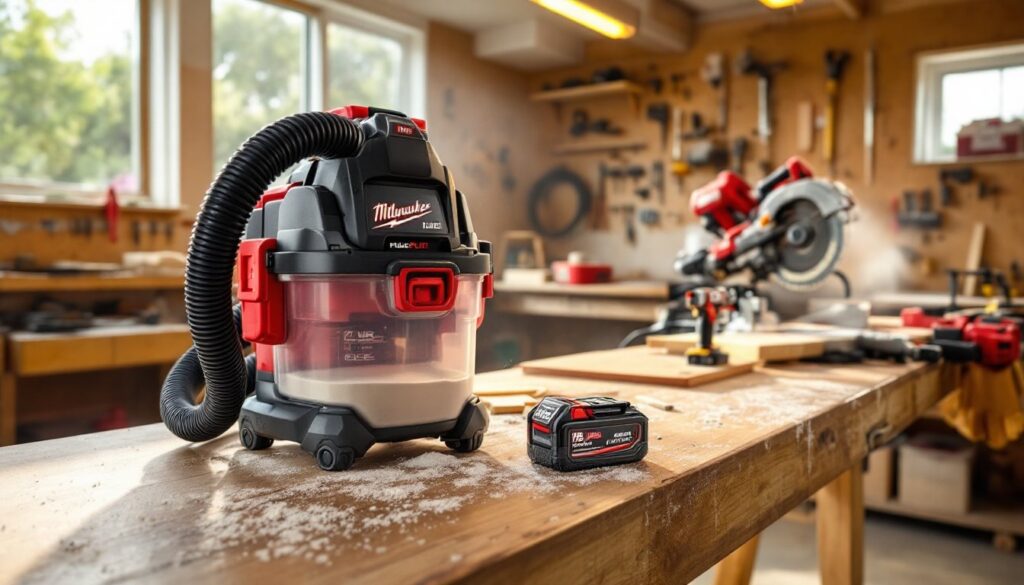
The M18 Compact Vacuum (model 0880-20) is Milwaukee’s entry-level option, think of it as a handheld shop vac with enough pull for everyday messes. It uses a 2-gallon tank, HEPA filtration, and a crevice tool or floor nozzle attachment. Weight is around 7 pounds without the battery.
Best use cases:
- Cleaning up after drilling or driver work (metal shavings, wood chips)
- Car or truck interior detailing
- Quick sweeps of the workbench or miter saw station
- Fine dust cleanup when paired with a HEPA filter (sanding, drywall)
Limitations: The 2-gallon tank fills fast if you’re doing serious demolition or cutting. Suction isn’t strong enough for heavy debris like gravel, wet plaster chunks, or thick sawdust piles from planing. It’s a convenience tool, not a dedicated dust extraction system.
Runtime on a 5.0Ah battery: roughly 25-30 minutes on low, 15-20 on high. If you’re doing finish carpentry or cabinetry and need frequent spot cleanups, this is the grab-and-go option.
M18 FUEL Wet/Dry Vacuum: Professional-Grade Performance
The M18 FUEL Wet/Dry Vacuum (model 0960-20) is the workhorse. It’s a 2-gallon tank like the compact model, but the brushless FUEL motor delivers 60% more suction and 50% more runtime compared to the brushed version. This is the one to consider if you’re running a miter saw with dust port extraction, cleaning up tile mortar, or handling wet messes from plumbing work.
Key upgrades over the compact:
- Wet/dry capability: Switch from dry dust to water cleanup without changing filters (use the foam sleeve for wet work)
- Auto-start functionality: Plug your tool into the vacuum’s power outlet, and it kicks on automatically when you trigger the tool, essential for saws, routers, or grinders
- Onboard hose and accessory storage: Keeps crevice tools, brushes, and extension wands attached to the body
This model handles the debris that testing by Popular Mechanics consistently highlights in shop vac evaluations: fine concrete dust, water from wet tile saws, and mixed job-site waste. It won’t replace a 16-gallon corded shop vac for gutting a kitchen, but it covers 80% of DIY and remodeling scenarios without needing a generator or outlet.
Runtime on a 6.0Ah High Output battery: approximately 30 minutes continuous on high, 45+ on low. If you’re running auto-start mode with intermittent tool use, that stretches much further.
Key Features That Set Milwaukee Vacuums Apart
Milwaukee didn’t just slap a motor and tank together. Several design choices make their vacuums more workshop-friendly than generic cordless units.
HEPA filtration is standard across the lineup. If you’re sanding MDF, cutting treated lumber, or grinding concrete, HEPA filters capture particles down to 0.3 microns, including silica dust and fine wood particulates that standard foam filters miss. You’ll still want respiratory protection (an N95 or P100 respirator) for sustained exposure, but HEPA filtration keeps the ambient air cleaner and prevents dust from recirculating.
Onboard hose storage on the FUEL model keeps the 7-foot hose coiled and attached. That matters more than it sounds, loose hoses get stepped on, kinked, or left behind. The integrated storage also includes clips for accessories, so your crevice tool isn’t rattling around the truck bed.
Auto-start (on FUEL models) pairs the vacuum with your power tools. Plug a corded tool, like a miter saw, router, or random-orbit sander, into the vacuum’s power outlet, and the vac turns on when you pull the tool’s trigger. This gives you hands-free dust extraction without manually toggling the vacuum. It’s not perfect (there’s a slight delay on startup), but it’s leagues better than trying to hold a sander and a vacuum hose simultaneously.
Wet/dry capability expands the tool’s utility beyond dust. Flooded basement corner? Tile saw runoff? Spilled paint thinner? Swap to the foam filter sleeve, and you’re good for liquids up to the 2-gallon max fill line. Just be aware: the vacuum does not pump or transfer water. You still need to lift the tank and dump it, so ergonomics matter if you’re clearing more than a gallon at a time.
Accessory compatibility: Milwaukee sells extension wands, gulper nozzles (wide intake for bigger debris), and dust brushes separately. The hose diameter is 1-1/4 inches, which fits most universal shop vac attachments but won’t connect to larger 2.5-inch dust extraction setups without an adapter.
How to Get the Most Out of Your Milwaukee Vacuum
These aren’t plug-and-forget appliances. A few habits will extend both performance and tool life.
1. Match the filter to the task. Use the HEPA filter for fine dust (drywall, sanding, MDF). Use the foam sleeve for wet pickup. If you try to vacuum water with a paper HEPA filter installed, you’ll destroy the filter and potentially short the motor. Keep a spare HEPA filter on hand, they’re washable and reusable, but they clog after heavy dust work.
2. Empty the tank before it’s full. The 2-gallon capacity sounds small, but if you let it pack to the brim with dense material (wet sawdust, plaster), suction drops and the motor works harder. Empty at the halfway mark during heavy jobs.
3. Use a high-capacity battery. The vacuum will run on any M18 battery, but a 6.0Ah High Output or 8.0Ah battery gives noticeably longer runtime and better sustained suction under load. Compact 2.0Ah batteries are fine for quick cleanups, but they’ll drain fast on high mode.
4. Pair it with tool dust ports. Milwaukee and most major brands design miter saws, circular saws, and sanders with dust extraction ports. Connect the vacuum hose to the port (you may need a universal adapter or step-down collar), and you’ll capture 70-80% of dust at the source. That’s far more effective than trying to vacuum the floor after the fact.
5. Store it clean and dry. After wet pickup, dump the tank, rinse it out, and let both the tank and foam filter air-dry before reassembly. Storing a wet vacuum leads to mold, odors, and corrosion of internal components. It takes five extra minutes but saves you from replacing a $150 tool.
6. Know when to call in a corded shop vac. If you’re doing whole-house demolition, stripping multiple rooms of carpet, or cleaning out a dusty attic, a corded 12-16 gallon shop vac is the right tool. Milwaukee’s cordless models shine in mobility and convenience, not marathon runtime or maximum capacity. Advice from Today’s Homeowner consistently emphasizes matching the tool to the project scope, don’t force a cordless vac into a job that demands corded power and capacity.
Conclusion
Milwaukee’s vacuum lineup delivers what most DIYers and homeowners actually need: cordless convenience, serious suction, and integration with an existing battery platform. The compact model works for light cleanup and portability: the FUEL wet/dry model handles real job-site messes and tool-connected dust extraction. Neither replaces a full-size corded shop vac for heavy-duty work, but for 80% of workshop and remodeling tasks, they’re faster, cleaner, and more practical than dragging cords.