
Table of Contents
ToggleTen years ago, cordless tools were the weaker cousins of corded equipment, underpowered, short-lived, and reserved for quick touch-ups. Today, battery power tools dominate job sites and home workshops alike. Lithium-ion technology has erased the performance gap, and in many cases, cordless options now outperform their plug-in counterparts in speed, torque, and convenience. For homeowners tackling weekend projects or building out a serious workshop, understanding battery platforms isn’t optional anymore, it’s foundational. This guide breaks down what’s changed, which tools matter, and how to build a cordless toolkit that won’t leave you halfway through a deck build with dead batteries.
Key Takeaways
- Lithium-ion battery power tools now outperform corded counterparts in speed, torque, and convenience thanks to brushless motor technology and modern battery ecosystems.
- Choosing the right battery platform—such as 18V/20V for light work or 60V for heavy-duty tasks—is the foundational decision that prevents costly platform switching later.
- Brushless motors deliver 25–50% better efficiency than brushed motors, extending tool lifespan and making the premium cost worthwhile for serious DIYers.
- Proper battery care, including storage between 50–77°F and rotating between multiple packs, significantly extends the lifespan of your cordless toolkit’s most expensive consumable.
- Essential battery power tools for homeowners include a cordless drill/driver (300–400 in-lbs torque), an impact driver (1,500+ in-lbs), and cordless saws for decking and trim work.
- Multi-port chargers and diverse amp-hour ratings (2.0Ah for compact tools, 5.0–6.0Ah for demanding tasks) ensure uninterrupted workflow on weekend projects and builds.
Why Battery Power Tools Have Revolutionized Home DIY
The shift to battery power isn’t just about cutting the cord. It’s about mobility, safety, and eliminating the extension-cord spaghetti that turns every project into a tripping hazard. Cordless tools let DIYers work anywhere, on a roof, in a crawl space, or out in the yard, without hunting for an outlet or dragging a generator.
Modern lithium-ion batteries deliver consistent power until they’re nearly depleted, unlike older nickel-cadmium (NiCd) cells that faded as they drained. Brushless motor technology has also played a huge role, boosting efficiency by 25–50% compared to brushed motors and extending both runtime and tool lifespan. That means a 20V MAX battery on a brushless drill can often outlast a corded drill on lighter tasks.
Another game-changer: interchangeable battery platforms. Most major manufacturers now offer ecosystems where one battery fits dozens of tools, from drills and saws to blowers and work lights. That modularity reduces clutter, cuts costs, and makes it easy to expand a toolkit without buying redundant chargers. For anyone building a workshop from scratch, the days of juggling five different battery types are over.
Understanding Battery Types and Technology
Not all batteries are created equal, and knowing the difference can save both money and frustration. Lithium-ion (Li-ion) is the industry standard in 2026, offering the best energy density, low self-discharge, and no memory effect. Unlike NiCd batteries, you don’t need to fully drain Li-ion cells before recharging, partial charges are fine and won’t shorten lifespan.
Voltage matters, but it’s not the whole story. Common platforms range from 12V (compact drivers, small saws) to 20V/18V (general-purpose drills, impact drivers, circular saws) up to 60V or higher (miter saws, lawn equipment, table saws). Higher voltage typically means more power, but it also adds weight. A 60V battery on a compact drill is overkill and uncomfortable for overhead work.
Amp-hours (Ah) measure capacity, how long a battery will run before needing a recharge. A 2.0Ah battery is lighter and balances well on smaller tools, while a 5.0Ah or 6.0Ah pack offers extended runtime for demanding tasks like cutting pressure-treated lumber or driving hundreds of screws. Many pros keep a mix: high-capacity batteries for heavy tools, compact ones for drills and drivers.
Brushless motors deserve mention here too. They use electronic controllers instead of carbon brushes, reducing friction and heat. The result is longer runtime per charge, more torque, and less maintenance. If choosing between a brushed and brushless version of the same tool, the brushless model will almost always justify the extra cost over its lifespan.
Essential Battery Power Tools Every Homeowner Needs
Cordless Drills and Impact Drivers
A cordless drill/driver is the cornerstone of any toolkit. Look for a model with at least 300–400 in-lbs of torque, a ½-inch keyless chuck, and a two-speed gearbox (one for drilling, one for driving). Brushless versions are worth the premium, they run cooler, last longer, and deliver more consistent power.
An impact driver is often misunderstood but indispensable. It uses rotational impacts (not to be confused with a hammer drill’s forward percussion) to drive screws and bolts without stripping heads or camming out. Impact drivers excel at lag screws, deck screws, and any fastener longer than 2 inches. The hex chuck accepts ¼-inch bits only, so it won’t replace a drill, but for driving, it’s unmatched. Expect 1,500+ in-lbs of torque on mid-range models.
Both tools should share the same battery platform. Many manufacturers sell combo kits with a drill, impact driver, two batteries, and a charger, often the most cost-effective entry point.
Battery-Powered Saws and Sanders
A cordless circular saw with a 6½-inch or 7¼-inch blade handles most framing, decking, and sheet goods. Brushless models on 20V platforms can rip through 2x dimensional lumber and plywood with ease. Blade-left designs improve sightlines for right-handed users. Expect around 4,000–5,000 RPM and a bevel capacity of at least 50 degrees.
For finish work, a cordless miter saw is a luxury that’s becoming more practical. These typically run on 60V or dual-battery setups to handle 10-inch or 12-inch blades. They’re excellent for trim, molding, and repeated crosscuts, though a corded miter saw still edges out on sustained heavy use.
Random orbital sanders (5-inch pad) are available in cordless versions that work well for deck refinishing, furniture prep, and drywall smoothing. Battery sanders won’t bog down mid-stroke like some corded models, and the lack of a cord prevents accidental sanding of your own power cable (it happens). Look for variable speed and a dust port compatible with shop vacs.
Homeowners tackling fence repairs or deck builds should consider a cordless reciprocating saw. These cut through nail-embedded lumber, PVC pipe, and tree roots. A tool-free blade change and adjustable shoe are must-haves. Many handheld tools now include anti-vibration features that reduce fatigue on longer cuts.
How to Choose the Right Battery Platform for Your Workshop
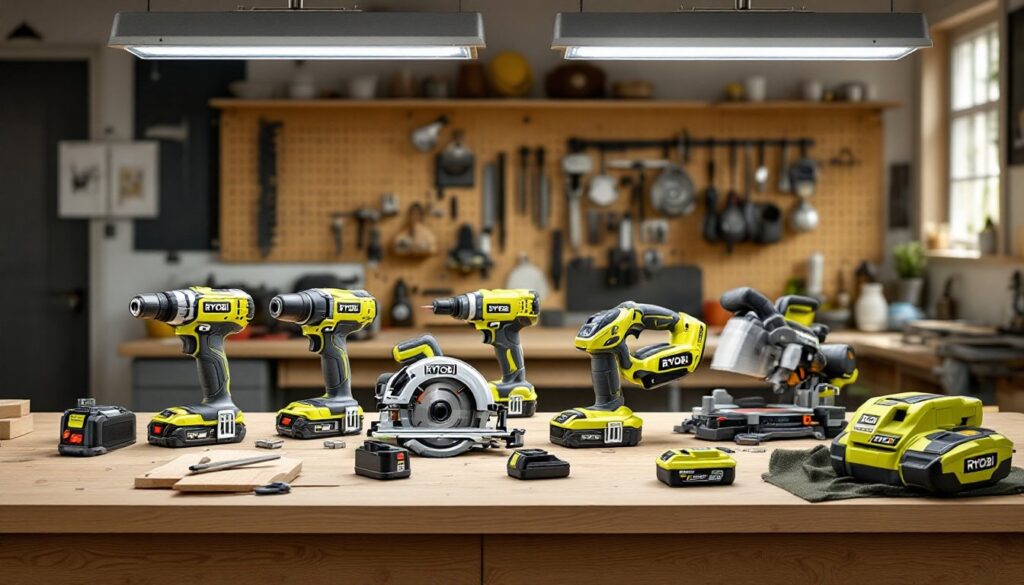
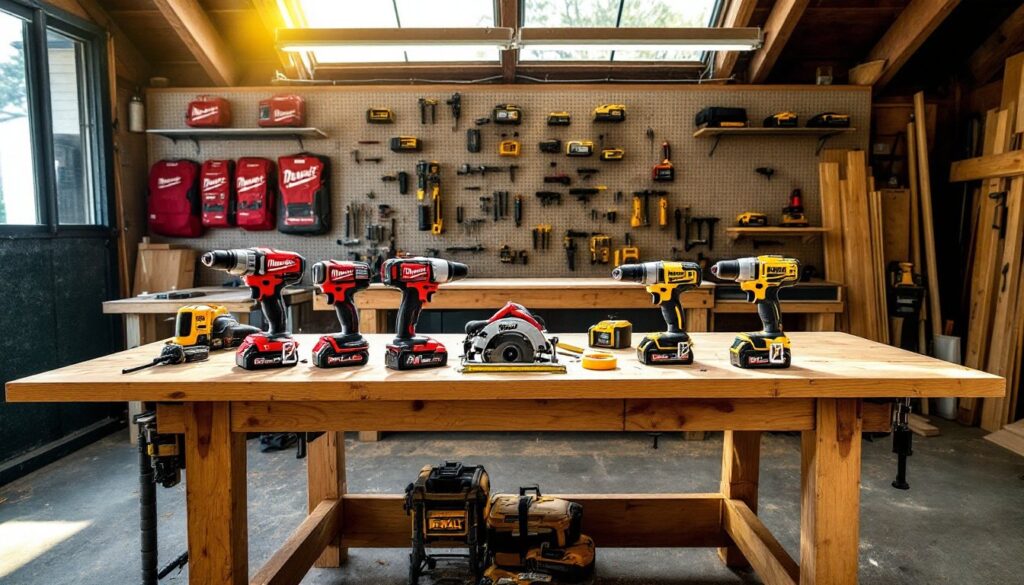
Picking a battery ecosystem is the single most important decision when building a cordless toolkit. Once committed, switching platforms is expensive and wasteful. Platforms from manufacturers like DeWalt, Milwaukee, Makita, and Ryobi each offer 50–100+ compatible tools, from drills to string trimmers.
Start by assessing what you’ll realistically use. If most projects involve light assembly, hanging shelves, and occasional deck maintenance, an 18V/20V platform covers everything. If you plan to run a miter saw, table saw, or high-demand outdoor equipment, look at 60V or FlexVolt systems that maintain backward compatibility with lower-voltage tools.
Tool selection within the platform matters. Some brands excel in certain categories, one might have the best compact impact driver, another the most reliable circular saw. Reviews from sources like Popular Mechanics and This Old House help cut through marketing claims.
Don’t overlook battery and charger availability. Platforms with widespread retail presence make it easier to grab a spare battery or replacement charger. Proprietary designs can leave you stranded if a part fails and it’s back-ordered.
Price is a factor, but focus on cost per tool over time. A cheaper platform with fewer tool options or lower build quality ends up costing more when tools need early replacement. Combo kits, seasonal sales, and bare-tool purchases (tool only, no battery) offer the best value once you’ve accumulated a few batteries.
Finally, consider crossover appeal. If you’re also investing in electrical tool kits, some platforms integrate inspection cameras, multimeters, and work lights on the same battery, streamlining your whole workshop.
Maximizing Battery Life and Performance
Batteries are the most expensive consumable in a cordless toolkit, so proper care extends their lifespan and saves money. Lithium-ion cells degrade over time, but smart habits slow the process.
Storage temperature matters. Keep batteries between 50–77°F when not in use. Extreme heat accelerates capacity loss: extreme cold temporarily reduces output. Don’t leave batteries in a truck bed during summer or a freezing garage in January. If a battery feels hot after heavy use, let it cool before recharging, charging a hot pack stresses the cells.
Partial charges are fine. Li-ion batteries don’t develop memory, so topping off between tasks won’t hurt. That said, avoid leaving batteries on the charger for days after they’ve hit 100%. Most modern chargers cut off automatically, but it’s still good practice to remove them.
For long-term storage (more than a month), charge batteries to around 40–50% and store them in a cool, dry place. A fully charged battery sitting idle degrades faster than one at partial charge.
Keep terminals clean. Dust and debris on battery contacts create resistance, reducing power transfer and generating heat. A quick wipe with a dry cloth every few months keeps connections solid.
Rotate batteries if you own multiple packs. Using the same battery for every task while others sit unused leads to uneven aging. Cycle through them to balance wear.
Finally, know when to retire a battery. If runtime drops to less than half its original capacity, or if the pack swells, gets unusually hot, or won’t hold a charge, replace it. Most manufacturers offer recycling programs, don’t toss Li-ion batteries in household trash.
Investing in a multi-port charger speeds up turnaround on big projects. Some models charge four batteries simultaneously, ensuring you’re never waiting on a dead pack when there’s work to finish. Pairing this strategy with insights from Fix This Build That helps DIYers keep projects moving without downtime.