
Table of Contents
ToggleCordless power tools have evolved from underpowered conveniences into serious workhorses that rival their corded counterparts. Today’s lithium-ion batteries deliver longer runtime, faster charging, and enough torque to handle everything from hanging shelves to building a deck. Whether you’re a weekend warrior tackling weekend projects or a serious DIYer outfitting a workshop, choosing the right cordless platform and tools can save you hours of frustration, and prevent a garage full of incompatible batteries. This guide breaks down the best cordless power tools across categories, with specific recommendations for drills, saws, sanders, and more, plus advice on navigating battery ecosystems without very costly.
Key Takeaways
- Modern lithium-ion cordless power tools now rival corded versions with longer runtime, faster charging, and enough torque to handle serious DIY and professional projects.
- Brushless motors deliver 30-50% more runtime and longer tool life compared to brushed models, making them worthwhile investments for frequent use.
- Start with a combo kit bundling a drill and impact driver with batteries and charger ($150-250) rather than buying tools individually to maximize value.
- Battery ecosystem compatibility is critical—each brand uses proprietary batteries, so choosing DeWalt, Milwaukee, Makita, Bosch, or Ryobi commits you to that platform long-term.
- For specialty tasks, a circular saw handles cutting lumber efficiently, while a random orbital sander with dust collection is essential for finish work and respiratory health.
- Always prioritize comfort and ergonomics by handling tools in-store before buying, as a fatiguing tool won’t get used regardless of power or specs.
Why Cordless Power Tools Are Essential for Homeowners
Mobility is the obvious win, no extension cords snaking through the house, no hunting for outlets, and no power limitations when working outdoors. But modern cordless tools offer more than convenience. Brushless motors deliver 30-50% more runtime and significantly longer tool life compared to older brushed models. Most current-generation tools also include electronic controls that adjust torque and speed based on load, reducing wear and preventing damage to materials.
Safety improves, too. Without cords, there’s less tripping hazard on job sites or in cramped spaces like attics and crawlspaces. Many cordless platforms now include built-in LED work lights and fuel gauges that display remaining battery charge, helping users plan work sessions without unexpected shutdowns mid-cut.
For homeowners who occasionally need handheld tools for repairs, cordless options eliminate the clutter of storing multiple cords and the hassle of setup. A quality drill/driver or impact driver can hang cabinets, assemble furniture, drill pilot holes, and drive deck screws, all on a single battery charge. That versatility makes cordless tools a practical first investment for any DIY toolkit.
Top Cordless Drills and Impact Drivers for Versatile Projects
Cordless drills remain the cornerstone of any tool collection. Look for models with at least 18V or 20V max power (nominal voltage is lower: marketing voltage reflects peak output). A 1/2-inch keyless chuck handles most bits, and a two-speed gearbox (0-450 and 0-1,800 RPM is typical) lets users switch between high-torque drilling and faster driving.
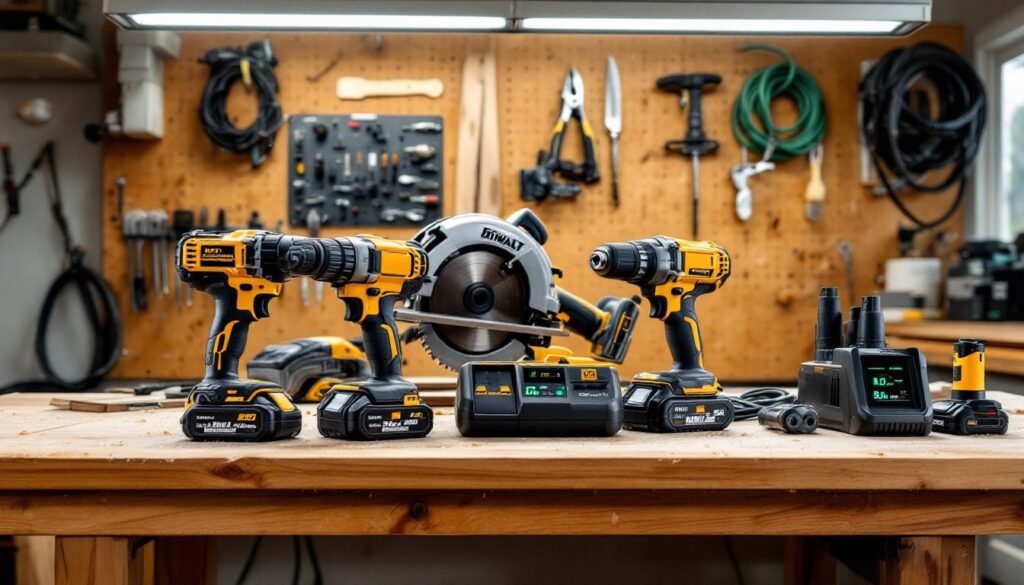
DeWalt’s DCD771 is a solid mid-tier option: compact, lightweight, and powerful enough for drilling into studs or driving 3-inch construction screws. Milwaukee’s M18 Fuel line offers brushless efficiency and exceptional runtime, making it a favorite among pros and serious DIYers. Both brands offer clutch settings (usually 15-20 positions) to prevent overdriving screws into softwoods or stripping heads.
Impact drivers deliver rotational force in quick bursts, making them far more effective than drills for driving long fasteners or lag bolts. They’re also lighter and shorter, which helps in tight spaces like between joists or inside cabinets. The downside: they’re loud. Wear hearing protection when running them continuously.
Makita’s XDT16 brushless impact driver and Bosch’s Freak models both provide 1,500+ inch-pounds of torque, enough to drive 6-inch structural screws without pre-drilling. For general carpentry, deck building, or cabinet installation, an impact driver often gets more use than a drill once you own both.
If budget allows, buy a combo kit with both tools and two batteries. Many manufacturers bundle a drill and impact driver with a charger and two 2.0Ah or 4.0Ah batteries for $150-250, depending on brand and sales. That’s far cheaper than buying tools individually.
Best Cordless Saws for Cutting and Woodworking
Circular saws are the workhorse for ripping plywood, cutting framing lumber, and trimming deck boards. Look for a 7-1/4-inch blade capacity, which cuts through a 2×4 (actual size 1.5″ x 3.5″) at 45 degrees in a single pass. Brushless models from DeWalt (DCS570 or DCS573) and Makita (XSH06) deliver consistent power and can make 300+ cuts per charge on a 5.0Ah battery.
Blade-left or blade-right configuration matters more than most people realize. Blade-left designs give right-handed users a clear sightline to the cut line, reducing mistakes and wasted material. DeWalt and Skilsaw favor this layout: most other brands default to blade-right.
For finish carpentry, trim work, or angled cuts, a cordless miter saw offers precision a circular saw can’t match. Models like the DeWalt DCS361 (7-1/4-inch) or Milwaukee M18 Fuel miter saw handle crown molding, baseboard, and picture frame miters with repeatable accuracy. They’re heavier and pricier than circular saws, but if you’re installing trim in multiple rooms, the time savings and cleaner cuts justify the cost. Keep in mind: cordless miter saws drain batteries quickly. A 6.0Ah or higher battery is recommended for extended use.
Reciprocating saws (recip saws) excel at demo work, cutting through nails, PVC pipe, tree branches, and old framing. They’re not precision tools, think of them as powered hacksaws. Milwaukee’s Sawzall and DeWalt’s FlexVolt recip saws both feature tool-free blade changes and adjustable shoes for better control. Always wear safety goggles and gloves: recip saws kick back if the blade binds.
Must-Have Cordless Sanders and Grinders for Finishing Work
Sanding by hand is slow and inconsistent. Random orbital sanders (ROS) remove material evenly without leaving swirl marks, making them ideal for prepping furniture, refinishing cabinets, or smoothing drywall patches. Most cordless models use 5-inch hook-and-loop sanding discs in grits from 80 (aggressive material removal) to 220 (final smoothing before finish).
Makita’s XOB01 and Bosch’s ROS65VC-5 both include dust collection ports. Connect a shop vacuum or dust bag to capture 90%+ of sanding dust, which is critical for indoor work and respiratory health. Always wear a dust mask or respirator rated for fine particles, even with collection systems running.
Detail sanders (also called mouse sanders or corner sanders) fit into tight spots, inside cabinet frames, around trim, or along edges where an ROS won’t reach. They’re slower and less aggressive, but necessary for finish work. DeWalt’s DCS355 oscillating multi-tool doubles as a detail sander and can cut, scrape, or grout-remove with accessory changes, offering more versatility than a dedicated detail sander.
Angle grinders are less common in general DIY work but invaluable for cutting metal, grinding welds, or removing rust and old paint. A 4-1/2-inch cordless grinder like Milwaukee’s M18 Fuel or DeWalt’s DCG413 handles most tasks without the bulk of a 7-inch model. Use cut-off wheels for metal, flap discs for smoothing, and always wear a face shield, gloves, and long sleeves, sparks and debris fly aggressively. Grinders also generate significant noise: hearing protection is non-negotiable.
Battery Compatibility and Platform Considerations
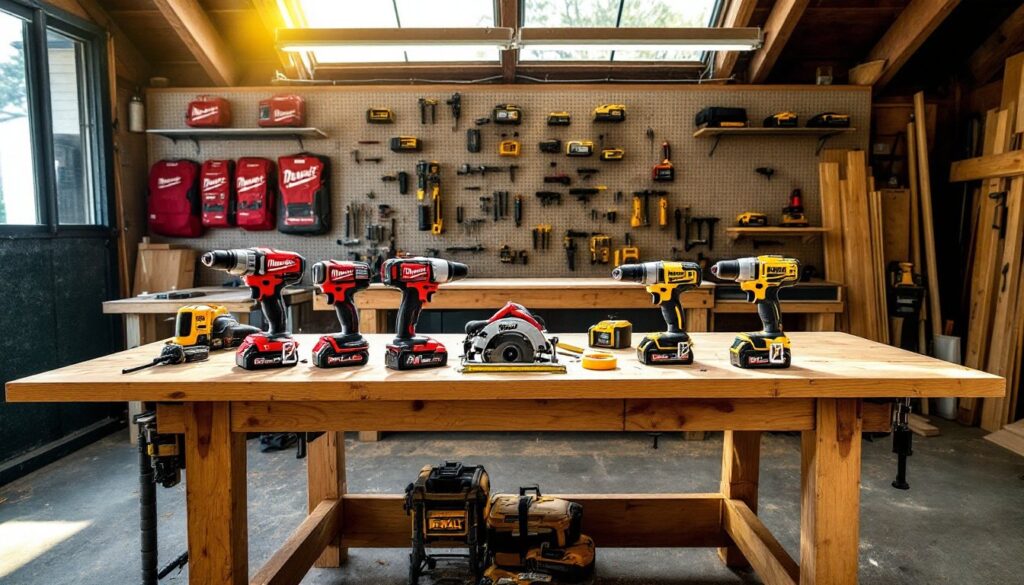
Choosing a tool brand is really choosing a battery ecosystem. Each major manufacturer, DeWalt, Milwaukee, Makita, Bosch, Ryobi, uses proprietary battery designs that don’t cross-platform. Once you invest in two or three tools and batteries from one brand, switching becomes expensive.
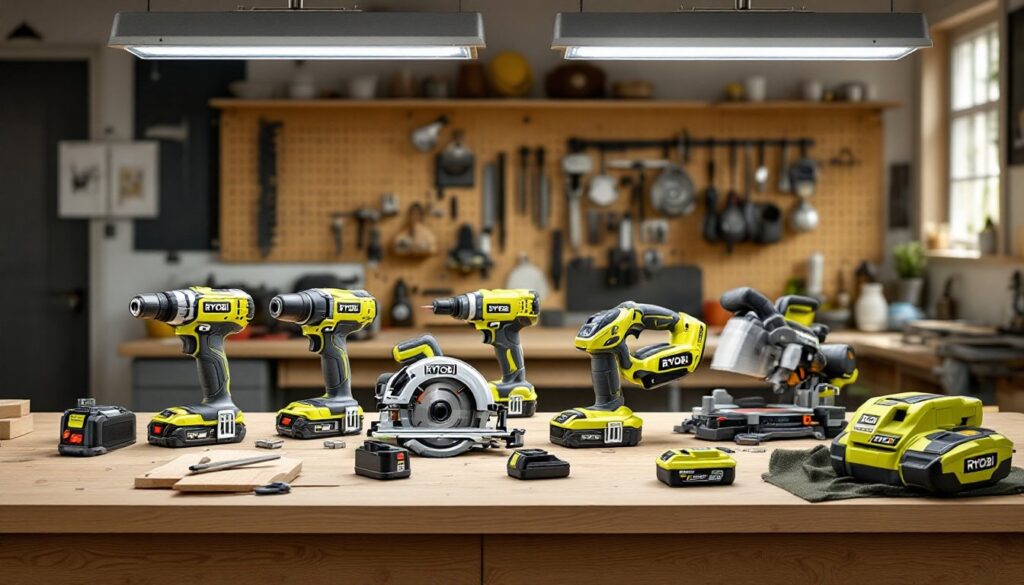
18V/20V platforms dominate the homeowner and light-pro market. DeWalt’s 20V Max, Milwaukee’s M18, and Makita’s 18V LXT all offer 100+ tools in their lineups, from drills to leaf blowers to inflators. Ryobi’s One+ system is more budget-friendly and includes over 200 tools, though they tend to be less powerful and durable than pro-grade lines.
Battery capacity matters. 2.0Ah batteries are compact and light but drain fast under heavy loads. 4.0-5.0Ah batteries strike the best balance for most users, enough runtime for a day’s work without excessive weight. 6.0Ah and higher are better suited to high-drain tools like miter saws, circular saws, and leaf blowers. Some brands offer FlexVolt or cross-voltage batteries that automatically adjust voltage based on the tool (e.g., DeWalt’s FlexVolt batteries run at 20V or 60V depending on the tool). These are pricier but future-proof your kit.
Many manufacturers also sell electrical tool kits that bundle batteries, chargers, and multiple tools at a discount. Combo kits are the most cost-effective entry point, especially during holiday sales when prices drop 20-40%. Track battery and charger compatibility when expanding your collection, older chargers may not support newer high-capacity batteries, and vice versa.
How to Choose the Right Cordless Power Tool for Your Needs
Start by defining your project scope. If you’re assembling furniture and hanging pictures, a basic drill/driver combo kit covers 90% of tasks. Add a circular saw if you plan to build shelves, install fencing, or frame a shed. For remodeling or woodworking, prioritize a miter saw and random orbital sander.
Consider brushless vs. brushed motors. Brushless tools cost 20-30% more but deliver longer runtime, less heat, and significantly longer motor life. If you’ll use a tool frequently, brushless pays for itself. For occasional-use tools (like a cordless grinder you’ll run twice a year), brushed models are fine.
Weight and ergonomics matter more than spec sheets suggest. A tool that’s uncomfortable or fatiguing won’t get used, no matter how powerful. Visit a home center and handle tools before buying. Check trigger feel, grip diameter, and balance. Side-handle models (common on drills) offer better control when drilling large holes or driving in tough materials.
Warranties vary widely. Most brands offer 1-3 year limited warranties on tools, with separate battery warranties (often 2-3 years). Milwaukee and DeWalt tend to have better service networks and replacement part availability. Ryobi tools carry lifetime warranties on some lines but have fewer service centers.
For guidance on project planning and tool selection, resources like Fix This Build That offer detailed breakdowns for woodworking setups, and Today’s Homeowner provides seasonal maintenance checklists that help identify which tools you’ll actually use. Don’t overbuy, a garage full of specialty tools you never touch is wasted money.
Conclusion
Building a cordless tool collection doesn’t require buying everything at once. Start with a quality drill and impact driver in your chosen battery platform, then expand based on actual project needs. Prioritize brushless motors, adequate battery capacity, and brands with strong warranties and tool variety. Whether you’re hanging drywall, building furniture, or tackling repairs, the right cordless tools make the work faster, safer, and far less frustrating.