
Table of Contents
ToggleMakita has been building tools since 1915, and while they’re best known for power tools, their hand tools deserve a closer look. If you’ve ever grabbed a tape measure that refuses to retract smoothly or a level that’s visibly off-kilter, you know that quality matters even in the simplest tools. Makita’s hand tool lineup isn’t flashy or gimmicky, it’s built for accuracy, durability, and the kind of daily use that separates weekend warriors from serious DIYers. This guide breaks down what makes Makita hand tools worth considering, which ones belong in your toolkit, and how to keep them working right for years.
Key Takeaways
- Makita hand tools are engineered for precision and durability, with features like nylon-coated blades that extend over 7 feet without collapsing and accuracy within 0.0005 inches per inch on levels.
- Essential Makita hand tools for any homeowner include a 25-foot tape measure, combination square, 48-inch level, utility knife, and claw hammer—tools that cover the majority of DIY projects.
- Choose Makita hand tools based on project scope and accuracy requirements; rough framing needs wide-blade tape measures with strong standout, while finish carpentry demands narrower blades with finer graduations.
- Regular maintenance such as wiping down tools, oiling tape measure blades, and performing annual calibration checks on levels will extend the lifespan of Makita hand tools significantly.
- Quality hand tools reduce fatigue and improve accuracy during all-day projects, making an investment in Makita tools worthwhile for those planning multiple DIY projects rather than one-time builds.
- Proper storage in a dry environment and using tool organizers prevents rust, wear, and damage—ensuring your Makita hand tools remain reliable for dozens of projects without losing precision.
Why Makita Hand Tools Stand Out in the Workshop
Makita didn’t build its reputation on hand tools alone, but the same engineering rigor that goes into their cordless drills carries over to their measuring tapes, knives, and layout tools. The brand focuses on precision manufacturing and material selection that translates to tools that hold up under real-world conditions.
Most Makita hand tools feature composite housings with rubberized grips, which means they survive drops onto concrete without cracking. Their tape measures use nylon-coated blades that resist wear and kinking, and the standout, the distance a blade stays rigid when extended, often exceeds 7 feet on their 25-foot models. That’s genuinely useful when you’re working alone and need to measure across a sheet of plywood without the tape collapsing.
The marking and layout tools, particularly their levels and squares, are machined to tighter tolerances than many budget brands. A spirit level that’s off by even half a bubble can throw an entire cabinet install, and Makita’s box levels typically hold accuracy within 0.0005 inches per inch. For reference, that’s about the thickness of two sheets of printer paper over a 4-foot span.
Another standout is their approach to ergonomics. Makita hand tools are designed for extended use, grips are contoured, not just wrapped in rubber, and weight distribution is balanced. A utility knife that feels good for the first cut but causes hand fatigue by the twentieth isn’t doing its job. Many professional builders have handheld tools from multiple brands, but Makita consistently earns a spot for comfort during all-day projects.
Finally, interoperability matters. Makita’s measuring tools often include magnetic bases, belt clips, and marking features that work seamlessly together. Their torpedo levels, for instance, have rare-earth magnets strong enough to stick to vertical steel studs while you work hands-free.
Essential Makita Hand Tools Every Homeowner Should Own
Measuring and Layout Tools
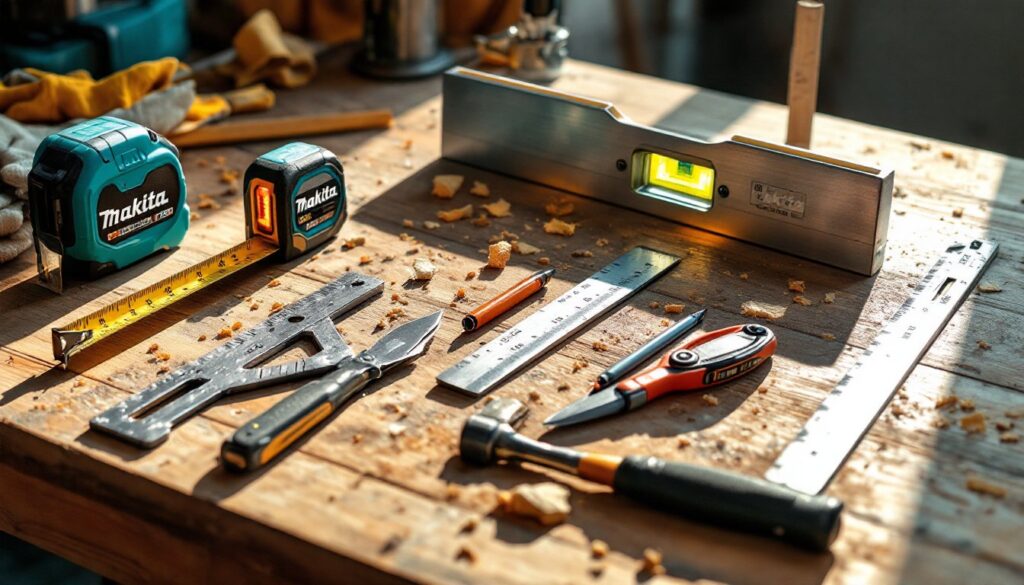
Start with a 25-foot tape measure like the Makita P-73025. The blade is 1 inch wide with a double-sided scale, meaning you can read measurements from either edge, helpful when you’re reaching into tight spaces. The end hook is riveted (not crimped) and has both horizontal and vertical grab slots for hooking onto edges or inside corners. The blade coating resists rust and the printing won’t rub off after a few months of riding in a tool belt.
A 6-inch or 12-inch combination square is indispensable for layout work. Makita’s squares use hardened stainless steel rulers with etched (not printed) graduations down to 1/32 inch. The head locks with a knurled knob that you can tighten with one hand, and the machined faces are flat enough to use for checking lumber for twist or cup. This is a tool you’ll use for marking 90-degree crosscuts, scribing lines parallel to an edge, and checking assembled corners for square.
For leveling, the 48-inch box level is the workhorse. Makita’s models typically have three vials (horizontal, vertical, and 45-degree) with high-visibility yellow fluid. The frame is extruded aluminum with milled edges, so you can use it as a straightedge for drawing layout lines. The accuracy spec to look for is 0.0005 in/in or better. If you’re installing shelving, hanging cabinets, or setting fence posts, this level will outlast half a dozen cheaper plastic models.
Cutting and Striking Tools
A retractable utility knife with a quick-change blade mechanism is a must. Makita’s versions use standard utility blades but feature tool-free blade swaps, press a button, slide out the old blade, drop in a new one. The body is die-cast zinc alloy, not plastic, so it won’t crack if you drop it off a ladder. The blade locks positively in three or four positions for different cutting depths, which is safer than models that rely on friction locks.
For marking cuts, a carpenter’s pencil might seem basic, but Makita offers mechanical carpenter’s pencils with 2mm leads and built-in sharpeners. The wide, flat lead doesn’t roll off sloped surfaces, and the clip keeps it secure. This is a small upgrade that prevents the constant hunt for a pencil mid-project, a frustration familiar to anyone who’s worked around sawdust and scrap piles.
Finally, a 16-ounce claw hammer rounds out the basics. Makita’s fiberglass-handle hammers have overstrike protection (a steel collar below the head) to prevent handle damage from mis-strikes, and the head is drop-forged steel with a milled face for positive nail contact. The grip is textured rubber that doesn’t slip when your hands are sweaty or dusty. While hammers seem interchangeable, a well-balanced one reduces fatigue and improves accuracy, especially if you’re driving dozens of finish nails.
Most DIYers build their collections over time, often when browsing hand tool deals, but starting with these core tools covers the majority of home projects.
How to Choose the Right Makita Hand Tool for Your Project
Choosing the right hand tool starts with project scope, not brand loyalty. Even excellent tools fail if they’re mismatched to the task. For rough framing, a 25-foot tape with a wide blade and strong standout is essential, you’re measuring long spans and need the blade to hold steady. For finish carpentry or cabinetry, a 12-foot or 16-foot tape with a narrower blade and finer graduations (1/32-inch or even 1/64-inch) gives better precision in tight spaces.
Material compatibility matters, too. Makita’s standard utility knives are fine for drywall, insulation, and roofing felt, but if you’re cutting laminate flooring or thick vinyl, look for a knife with a reinforced blade channel and a metal blade slider. For layout, a combination square works for most carpentry, but if you’re building cabinets or furniture, add a try square or framing square to your kit. Try squares have fixed 90-degree angles with no moving parts, making them more reliable for critical joinery.
Consider tool lifespan versus project frequency. If you’re tackling one bathroom remodel, budget tools might suffice. But if you’re planning multiple projects, deck building, shed construction, interior trim work, investing in Makita hand tools makes sense. Their tape measures, for example, often last years under daily use, while bargain-bin versions might fail within months. When researching options, resources like Family Handyman offer project-based tool recommendations that help match tools to real-world applications.
Accuracy requirements also drive selection. Hanging a picture frame can tolerate slight variances: installing countertops cannot. For high-precision work, choose tools with verifiable specs. Makita publishes accuracy data for their levels and squares, if a level doesn’t state its tolerance, it’s probably not reliable for critical work. For trim carpentry and furniture projects, many builders reference guides from sites like Fix This Build That to understand which tools meet professional-grade tolerances.
Finally, think about compatibility with your existing toolkit. If you already own Makita power tools, their hand tools often share design language, similar grip textures, color coding, and storage solutions. This isn’t just aesthetics: it’s about creating a cohesive workflow where tools work together efficiently. For instance, their levels and tape measures both feature magnetic bases that stick to the same steel surfaces, enabling hands-free operation.
Caring for Your Makita Hand Tools: Maintenance Tips for Longevity
Hand tools don’t require as much maintenance as power tools, but neglect will shorten their lifespan. Start with regular cleaning. Sawdust, drywall dust, and general grime accumulate in tape measure housings, level vials, and square channels. After each project, wipe down tools with a dry cloth. For stubborn residue, use a damp rag, avoid solvents unless the manufacturer specifies them, as some chemicals can degrade rubberized grips or plastic housings.
Tape measures need periodic blade care. Extend the blade fully and wipe it down with a lightly oiled cloth (3-in-1 oil or sewing machine oil works). This prevents rust and keeps the coating intact. Inspect the end hook for looseness, it’s designed to slide slightly to account for inside and outside measurements, but excessive play means the rivets are failing. Most Makita tapes allow hook replacement, which extends tool life significantly.
Levels require calibration checks at least annually, or whenever you drop one. To test, place the level on a flat surface and note the bubble position. Rotate the level 180 degrees on the same surface. The bubble should read identically. If it doesn’t, the vial is out of true. Most Makita box levels don’t have user-adjustable vials: if accuracy drifts, replacement is necessary. This is why protecting levels from drops and storing them flat (not leaning in a corner) matters.
Utility knives stay sharper longer with proper blade changes. Dull blades require more pressure, which increases slip risk and material tear-out. Change blades as soon as they drag rather than slice cleanly. Store spare blades in the knife’s handle compartment if available, and always retract the blade when not in use. For those expanding their mechanical workshop tools, dedicated blade disposal containers prevent injuries and keep sharp edges organized.
Storage is half the battle. Keep hand tools in a dry environment, moisture causes rust on metal components and warps wooden handles. Tool belts, pegboards, and drawer organizers all work, but avoid tossing tools loose in a toolbox where they bang against each other. Makita’s rubberized grips are durable, but constant abrasion will eventually wear through. If you’re building out a comprehensive hand tool set, consider foam inserts or dedicated compartments that protect tools during transport and storage.
Finally, inspect before each use. Check tape measure blades for kinks, level vials for cracks, and square heads for tightness. A loose square head can shift mid-measurement, ruining a cut. Catching small issues early, like a fraying tape hook or a cracked level vial, prevents bigger problems down the line.
Conclusion
Makita hand tools won’t revolutionize your workshop overnight, but they’ll quietly perform better and last longer than cheaper alternatives. Precision matters when you’re cutting expensive hardwood or installing trim that needs to look professional, and tools that hold their accuracy make that possible. Start with the essentials, tape measure, level, square, knife, and expand as projects demand. With basic maintenance and proper storage, these tools will serve you through dozens of projects without losing a step.