
Table of Contents
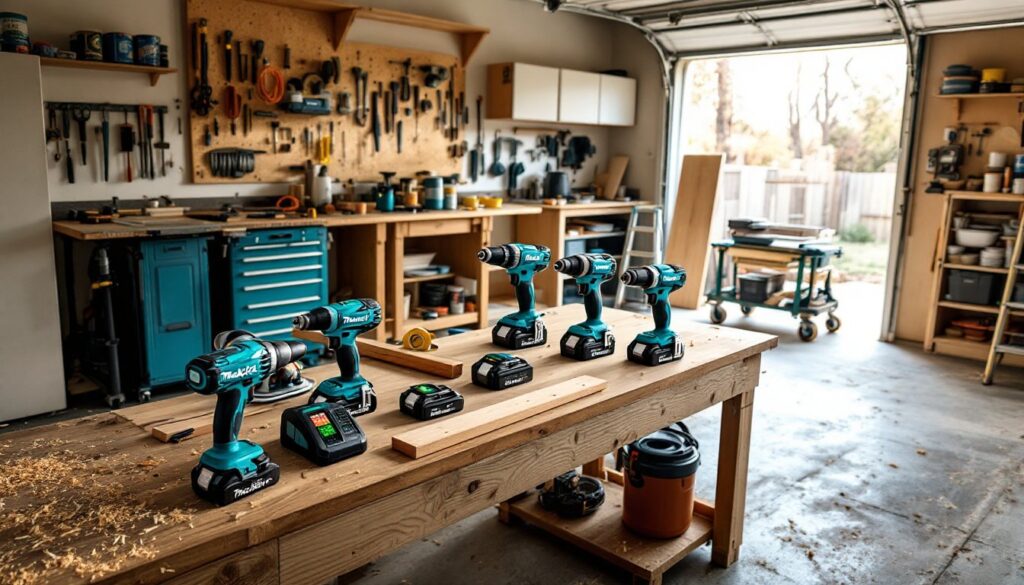
ToggleIf you’ve been eyeing the teal-colored tools at the home center, you’re not alone. Makita’s cordless battery systems have become a go-to choice for homeowners who want professional-grade performance without the hassle of cords. But with two distinct battery platforms and dozens of tools to choose from, figuring out where to start can feel overwhelming. This guide breaks down what makes Makita’s battery-powered tools worth the investment, how their platform works, and which tools will actually get used in your garage or workshop.
Key Takeaways
- Makita battery tools use interchangeable batteries and chargers across their 18V LXT platform, which includes over 325 tools, eliminating the need for multiple charging systems.
- The 18V LXT is the best starting point for homeowners due to larger tool selection, cheaper batteries ($60–$100), and more than adequate power for residential DIY projects.
- A 5.0Ah Makita battery delivers 50–70 drill holes or 30–40 circular saw crosscuts per charge, making it suitable for most weekend projects without frequent recharging.
- Starting with a combo kit ($200–$350) that includes drill, impact driver, batteries, and charger is more economical than buying individual tools, and bare-unit purchases expand your collection affordably.
- Proper battery storage between 40–80% charge, avoiding extreme temperatures, and using Makita’s official chargers extends battery lifespan to 800–1,000 charge cycles.
- Essential Makita cordless tools for DIYers include a drill/driver and impact driver combo for fastening, a circular saw for cutting, and outdoor tools like trimmers and blowers for expanded capability.
Why Makita Battery-Powered Tools Are a Smart Investment for Homeowners
Makita didn’t invent the cordless tool, but they’ve refined it to the point where most DIYers won’t miss a corded model. Their 18V LXT platform launched in 2005 and now includes over 325 tools, everything from drills and impact drivers to leaf blowers and coffee makers. Yes, coffee makers.
The real advantage isn’t novelty. It’s interchangeability. Buy one Makita battery system, and every tool you add uses the same batteries and chargers. No more drawer full of mismatched chargers or dead batteries from three different brands.
Makita’s brushless motor technology delivers longer runtime and more power per charge compared to older brushed models. A 5.0Ah 18V battery will typically run a drill for 50–70 holes through 2×4 framing lumber on a single charge, and a circular saw can make 30–40 crosscuts in dimensional lumber before needing a swap. That’s more than enough for most weekend projects.
Build quality matters when you’re working on a ladder or in tight spaces. Makita tools use metal gearboxes and reinforced housings that hold up to jobsite abuse. They’re not indestructible, but they’ll survive a drop off a sawhorse better than budget-brand alternatives. Many pros trust them daily, which says something about durability.
Understanding Makita’s Battery Platform and Compatibility
Makita runs two main battery systems, and picking the wrong one can box you in later. Here’s what you need to know.
The 18V LXT is Makita’s workhorse platform. It uses lithium-ion batteries ranging from 2.0Ah to 6.0Ah capacity. Higher amp-hour (Ah) ratings mean longer runtime but also more weight. A 2.0Ah battery weighs about 1 pound: a 6.0Ah tips the scale near 1.5 pounds. For overhead work or detail tasks, lighter batteries reduce fatigue.
All 18V LXT batteries work with all 18V LXT tools, no exceptions. A battery purchased in 2008 still fits a tool released this year. That backward and forward compatibility is rare in power tools and protects your investment.
Makita also offers an 18V X2 system, which uses two 18V batteries in tandem to deliver 36V performance. This powers larger tools like miter saws, lawnmowers, and dust extractors without requiring a separate battery platform. It’s clever engineering: you get high-voltage performance using batteries you already own.
18V LXT vs. 40V XGT: Which System Is Right for You?
In 2020, Makita introduced the 40V XGT platform for demanding professional applications. XGT batteries deliver more power and faster charging, a 4.0Ah XGT battery charges in about 45 minutes versus 60+ minutes for a comparable LXT.
But for most homeowners, 18V LXT is the better starting point. The tool selection is vastly larger, batteries are cheaper (expect $60–$100 per battery versus $120–$180 for XGT), and the power is more than adequate for residential projects. According to testing by Popular Mechanics, 18V systems handle nearly all DIY tasks without breaking a sweat.
Choose XGT only if you’re regularly running high-demand tools like 7-1/4″ circular saws, large rear-handle saws, or commercial-grade blowers for extended periods. For trim work, deck building, furniture projects, and home repairs, LXT has you covered.
Essential Makita Cordless Tools Every DIYer Should Consider
Start with the drill/driver and impact driver combo. These two tools cover 80% of fastening tasks around the house. The drill handles pilot holes and general drilling: the impact driver powers screws into dense material without stripping heads or stalling out. Makita’s sub-compact models (like the FD07 and TD07 series) weigh under 2.5 pounds and fit into tight spaces, cabinet installs, closet shelving, anything requiring one-handed maneuvering.
Next, add a circular saw. The 6-1/2″ models (like the XSH06 or SH02) are lighter and easier to control than full-size 7-1/4″ saws, yet they still cut through 2× lumber and sheet goods cleanly. Pair it with a 50-tooth carbide blade for plywood to minimize tearout. A corded circular saw offers unlimited runtime, but dragging an extension cord across a deck frame gets old fast.
For finish work, a random orbital sander and oscillating multi-tool punch above their weight. The sander smooths drywall repairs, preps trim for paint, and levels wood filler without the arm fatigue of hand-sanding. The multi-tool cuts door jambs for flooring, removes old caulk, scrapes paint, and handles detail cuts where a full-size saw won’t fit. Both are compact, battery-efficient tools that cost under $100 as bare units.
If you do any outdoor maintenance, the 18V X2 (36V) string trimmer and blower run longer and stronger than lower-voltage models. A pair of 5.0Ah batteries will trim an average suburban lawn and clear the driveway without needing a recharge. They’re quieter than gas models, start instantly, and require zero engine maintenance. No pull cords, no carburetor cleaning, no mixing fuel.
Woodworkers should consider the track saw or plunge router. The track saw replaces a table saw for breaking down sheet goods, and it’s safer and more portable. A plunge router opens up joinery options, dados, rabbets, edge profiles, that elevate projects from basic to custom. Both are investments, but they expand capability significantly. Fix This Build That features dozens of projects where these tools make the difference between store-bought and heirloom quality.
How to Maximize Battery Life and Performance
Lithium-ion batteries don’t have memory effect, so partial charges won’t hurt them. But a few habits will extend their lifespan.
Store batteries between 40–80% charge if you won’t use them for weeks. A fully charged battery sitting idle degrades faster than one at mid-charge. Makita batteries have built-in charge indicators, three or four LEDs on the side. Aim for two or three lit when storing long-term.
Avoid extreme temperatures. Batteries perform poorly below 32°F and degrade quickly above 120°F. Don’t leave them in a hot truck bed in summer or a freezing garage in winter. If a battery gets cold, let it warm to room temperature before charging. Charging a cold battery can cause internal damage.
Use the right charger. Makita’s DC18RC rapid charger is standard with most kits and charges a 5.0Ah battery in about 45 minutes. The DC18RD dual-port charger handles two batteries simultaneously, worth it if you’re running high-drain tools back-to-back. Avoid off-brand chargers: they may not balance cells correctly, shortening battery life.
Match battery capacity to the task. A 2.0Ah battery is fine for a drill doing light work, but it’ll drain fast in a circular saw. Conversely, hanging a 6.0Ah battery on a compact impact driver for assembling furniture is overkill and adds unnecessary weight. Keep a mix of capacities on hand.
Clean contacts regularly. Dust and debris on battery terminals reduce conductivity and cause connection issues. Wipe terminals with a dry cloth every few months, or whenever you notice the tool hesitating or cutting out. Many homeowners skip basic tasks like pairing the right electrical tool kits with their cordless systems, but matching accessories to tools improves both performance and safety.
Makita batteries include overload protection, temperature monitoring, and individual cell management. These features prevent overheating and over-discharge, but they’re not invincible. Treat batteries like the precision electronics they are, and they’ll last 800–1,000 charge cycles, years of typical homeowner use.
Building Your Makita Tool Collection on a Budget
Buying into a cordless system isn’t cheap, but a few strategies keep costs reasonable.
Start with a combo kit. Makita’s 2-piece and 4-piece kits include a drill, impact driver, two batteries, a charger, and a carrying bag for $200–$350. That’s significantly cheaper than buying everything separately. The batteries and charger alone would cost $150–$200 retail.
Once you have batteries and a charger, buy tools as bare units (tool only, no battery or charger). A bare-tool impact wrench runs $100–$130 versus $250+ in a kit. The savings add up quickly as your collection grows.
Watch for seasonal sales. Home Depot, Lowe’s, and Acme Tools run promotions around major holidays, Memorial Day, Black Friday, Father’s Day. Discounts of 20–30% are common, and some deals include bonus batteries. Sign up for email lists: retailers often send exclusive coupons.
Consider refurbished tools. Makita’s factory-refurbished tools come with a 1-year warranty and cost 30–40% less than new. They’re typically customer returns with cosmetic blemishes or open-box units that never saw use. Check Makita’s official refurbished section or authorized dealers. Avoid third-party refurbs unless the seller offers a solid return policy.
Prioritize versatile tools over specialty items. A multi-tool handles more tasks than a dedicated detail sander. A circular saw with a fine-tooth blade can rip, crosscut, and even make miter cuts (though not as cleanly as a miter saw). Build your core lineup first: drill, impact driver, saw, sander. Add niche tools as specific projects demand them.
Share or rent expensive tools. If you need a track saw or sliding miter saw for a single project, renting costs $40–$60 per day versus $400–$600 to buy. Tool libraries and maker spaces also offer access to premium tools for an annual membership fee. For guidance on maximizing value across all tool types, exploring ongoing hand tool deals can stretch your budget further.
Reputable DIY resources like Family Handyman often feature budget-friendly tool recommendations and project-based buying guides that help prioritize purchases based on actual usage patterns rather than marketing hype.
Conclusion
Makita’s battery tool systems offer the reliability and performance most homeowners need without the premium price tag of some competitors. The 18V LXT platform provides unmatched tool selection and compatibility, while smart buying strategies and proper battery care keep long-term costs manageable. Start with the essentials, add tools as projects require, and you’ll build a cordless lineup that handles everything from quick repairs to full-scale renovations.